
Texas SR-22 Insurance Quotes, Cost and Requirements
Texas SR-22 insurance is regular liability coverage supported by a financial-responsibility certificate filed with Texas DPS. The SR-22 is not a separate insurance policy. A clean comparison starts with the same violation details, vehicle ownership, real garaging ZIP, liability limits, optional coverage, deductibles, payment plan, policy term, and effective date.
Enter the ZIP code where the vehicle is normally kept overnight. Keep the same driver record, vehicle ownership, mileage, use, liability limits, optional coverage, filing requirement, payment terms, policy term, and effective date across every quote.
QuotesAutoInsurance.org is independently operated and may connect users with licensed insurance providers or partners. The form does not guarantee an SR-22 filing, a particular insurer, policy issuance, discount, or price. Availability depends on ZIP code, driver, vehicle, filing eligibility, coverage, and partner review.
Texas SR-22 Insurance: Direct Answer
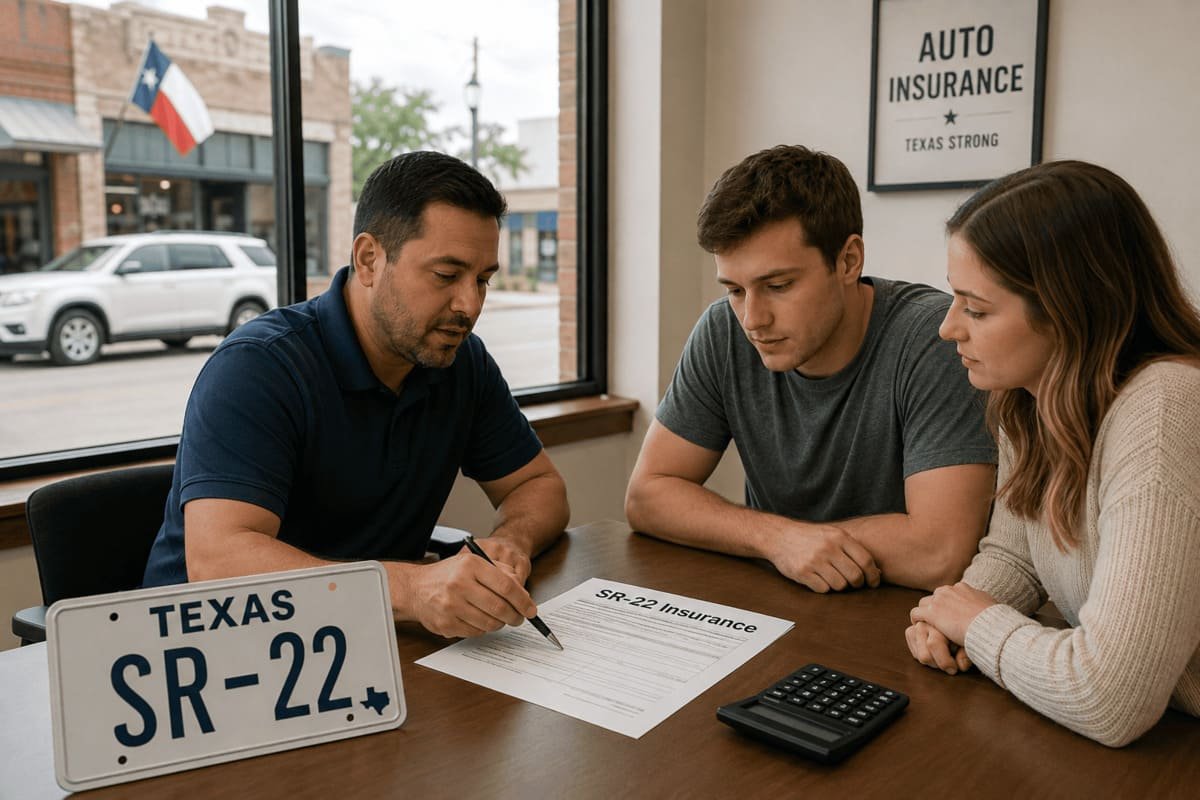
Texas proof of financial responsibility can require a Texas SR-22 certificate after certain convictions, judgments, suspensions, or repeat insurance-related enforcement actions. The controlling requirement comes from the driver’s DPS record, not from a generic online estimate.
For the official filing rules, two-year requirement, non-owner option, lapse consequences, processing time, and submission guidance, use the Texas DPS SR-22 resource.
For the broader insurance layer around the filing, including weather exposure, statewide carrier fit, and general coverage decisions, use Texas auto insurance quotes by ZIP without mixing those broader questions into the SR-22 compliance decision.
Texas SR-22 Requirements and the Two-Year Clock
Texas SR-22 requirements vary by enforcement action, but Texas DPS generally states a two-year requirement from the most recent qualifying conviction or from the date a qualifying judgment was rendered. The Texas SR-22 two-year requirement is therefore tied to the controlling event, not automatically to the day the insurer first files the certificate.
This matters when asking how long do you need an SR-22 in Texas. If the first filing occurs after part of the required period has already elapsed, the remaining obligation may be shorter than a new two-year period. A new qualifying conviction or judgment can change that calculation.
| Compliance item | Texas rule or practical meaning | What to verify |
|---|---|---|
| Filing period | The Texas SR-22 filing period is generally two years from the controlling conviction or judgment date. | Confirm the exact controlling date in the DPS record. |
| Minimum liability | Texas SR-22 minimum liability limits must meet at least Texas 30/60/25 liability. | Check the quote or Texas SR-22 declarations page. |
| Continuous filing | The insurer can notify DPS of Texas SR-22 cancellation, termination, or lapse. | Keep payment information current and prevent a replacement gap. |
| Processing | Texas SR-22 processing time may be up to 21 business days. | Use Texas License Eligibility to confirm processing. |
The separate Texas 30/60/25 liability rules page explains the underlying liability floor in more detail. On this page, the focus is how that minimum interacts with a required Texas SR-22 filing.
What Creates Texas SR-22 Cost
There is no single statewide Texas SR-22 cost. The certificate itself may involve an insurer charge, but Texas SR-22 insurance cost is usually driven much more by the underlying driver profile and the event that caused the filing requirement.
Texas SR-22 insurance rates can reflect the violation or judgment, driving history, age, prior insurance, Texas SR-22 ZIP code, vehicle, use, mileage, liability limits, optional coverage, deductibles, policy term, payment plan, and the carrier’s underwriting fit.
Cheap SR-22 insurance in Texas should therefore be compared as a complete policy-term cost. A low monthly payment can hide a larger first payment, installment charges, different limits, fewer optional coverages, or a shorter billing structure.
A DWI, DWLI, uninsured-driving history, judgment, or other qualifying action can change underwriting and eligibility.
Prior coverage, lapses, cancellations, limits, claims, and the requested effective date can affect carrier fit.
The Texas SR-22 garaging ZIP should reflect where the vehicle is actually kept overnight.
Liability, UM/UIM, PIP, collision, comprehensive, deductibles, and payment terms can materially change price.
To isolate location from the rest of the application, use compare auto insurance rates by ZIP code while keeping the SR-22 requirement, driver, vehicle, limits, and effective date unchanged.
Texas SR-22 Quotes by ZIP and Carrier Fit
Texas SR-22 quotes by ZIP can differ even when the filing requirement is identical because the underlying auto policy is still priced by carrier-specific underwriting and rating factors. The Texas SR-22 ZIP code should reflect the real garaging location rather than a nearby address chosen to test a lower price.
For a clean Texas SR-22 carrier comparison, keep the same conviction information, driver record, vehicle ownership, garaging ZIP, liability limits, optional coverage, deductibles, payment plan, policy term, and effective date. Then change only the insurer and compare the complete policy-term result.
The broader auto insurance quotes by ZIP code route can be used to compare matched location-based pricing without changing the SR-22 compliance facts.
Owner vs. Non-Owner SR-22 Policy Fit
A Texas owner SR-22 policy is appropriate when the driver owns a vehicle that needs to be insured and the carrier can support the required filing. The actual vehicle, VIN, garaging address, regular drivers, financing, use, and annual mileage should be disclosed accurately.
Texas SR-22 without a car is different. A driver who does not own a vehicle can still have a filing requirement and may need Texas non-owner SR-22 coverage. Non-owner SR-22 insurance in Texas generally addresses liability for the named driver rather than physical-damage protection for a specific owned vehicle.
| Situation | Policy direction | Important check |
|---|---|---|
| You own a vehicle | Use an owner policy that supports the Texas SR-22 filing. | List the real vehicle, drivers, garaging, use, and financing. |
| You do not own a vehicle | Ask whether a Texas non-owner SR-22 is appropriate. | Disclose household vehicles, regular access, rentals, and borrowed-car use. |
| You regularly use someone else’s car | Explain the vehicle access before choosing non-owner coverage. | Do not assume a non-owner policy covers a car regularly available to you. |
| You buy a car later | Update the insurer before driving the newly acquired vehicle. | The policy, rating, filing, and lender-required coverage may need to change. |
Common Filing Triggers and High-Risk Carrier Fit
Texas SR-22 for DWI, Texas SR-22 after DWLI, Texas SR-22 after no insurance, and Texas SR-22 after license suspension are all common filing scenarios, but the exact requirement depends on the driver’s record and enforcement action. DPS—not the insurer’s marketing page—controls whether the filing is required.
These scenarios often overlap with Texas high-risk auto insurance. Texas high-risk driver insurance does not mean every carrier will price the record the same way. Some insurers may not offer SR-22 filings at all, while others may accept the filing but price the underlying driver differently.
That is why Texas SR-22 carrier comparison should change the carrier while keeping the application stable. Use compare insurance companies to build a wider shortlist rather than assuming one “high-risk” company is automatically cheapest for every driver.
How to Get and Verify a Texas SR-22 Filing
A Texas SR-22 filing begins with the actual DPS requirement. Check the driver’s enforcement action, eligibility status, outstanding fees, suspension period, education requirements, interlock requirements when applicable, and any other compliance items before assuming that an SR-22 alone restores driving privileges.
A Texas SR-22 filing confirmation from the insurer is useful, but the state record is the final compliance checkpoint. A standard Texas SR-22 insurance card is not a substitute for the required certificate, and a payment receipt is not proof that DPS has processed the filing.
When coverage must begin quickly, the same-day auto insurance quotes route can help with policy activation, but same-day policy issuance and completed state processing are still separate stages.
Switch Texas SR-22 Insurance Without a Gap
Texas SR-22 switching insurers is possible, but the sequence matters more than the quote date. The replacement carrier should approve the policy, accept the required payment, issue coverage, and support the new filing before the old policy is cancelled.
A Texas SR-22 lapse can lead to another suspension and additional compliance work. Texas SR-22 reinstatement after a lapse can require a new SR-22 and the applicable Texas SR-22 reinstatement fee. DPS specifically identifies a $100 reinstatement fee for the safety-responsibility suspension scenario caused by failure to maintain the required filing.
For broader lapse-prevention logic, the fast coverage for a car today workflow is useful only when policy issuance, payment acceptance, effective time, and required filing support are all confirmed.
Collision, Comprehensive, and Financed Vehicles
Texas SR-22 liability insurance satisfies the filing layer when it meets the required liability standard, but the SR-22 does not create collision or comprehensive coverage. Drivers with a financed or leased vehicle may still need broader physical-damage coverage because of the finance agreement.
If the vehicle needs collision and comprehensive, compare compare full coverage auto insurance without confusing lender requirements with the SR-22 itself. The filing proves liability coverage; the lender’s concern is protection for the financed asset.
A Texas SR-22 policy term should also be checked carefully when a six-month or other term is offered. The filing obligation can continue across multiple policy terms, so a renewal date does not mean the DPS requirement has ended.
FAQ About Texas SR-22 Insurance
No. An SR-22 is a certificate filed by an authorized insurance provider to prove that qualifying motor vehicle liability insurance is in force.
Texas DPS generally requires a valid SR-22 for two years from the date of the most recent qualifying conviction or from the date a qualifying judgment was rendered.
A lapse can cause another suspension, a new SR-22 submission, and reinstatement fees. The remaining period is tied to the controlling conviction or judgment date unless a new qualifying action changes the requirement.
The underlying policy must meet at least Texas 30/60/25 liability: $30,000 per injured person, $60,000 per accident for bodily injury, and $25,000 for property damage.
Yes. A driver who does not own a vehicle can ask an authorized insurer about a Texas non-owner SR-22 policy, subject to vehicle access and underwriting rules.
There is no universal price. Texas SR-22 insurance cost depends mainly on the driver record, violation, ZIP, prior insurance, vehicle, liability limits, optional coverage, deductibles, insurer, and payment plan.
No. Texas DPS does not accept a standard insurance card or policy document in place of the required SR-22 certificate.
Texas DPS says SR-22 processing may take up to 21 business days. Check Texas License Eligibility to confirm that the filing and other compliance items have been processed.
Yes, but the replacement policy and filing should be active before the prior policy is cancelled. A gap can trigger additional enforcement and reinstatement consequences.
Use the same driver, violation details, vehicle ownership, garaging ZIP, liability limits, optional coverage, deductibles, policy term, payment plan, and effective date, then compare the complete cost and filing support.
Bottom line: compare Texas SR-22 insurance quotes by locking the DPS requirement, owner or non-owner policy type, real ZIP, liability limits, optional coverage, deductibles, payment terms, policy term, and effective date first. Then compare carriers, confirm the filing, prevent a lapse, and use the DPS record—not a renewal date—to decide when the requirement is complete.