
Compare Auto Insurance Rates by ZIP Code
Compare auto insurance rates by ZIP code using the real location where your vehicle is normally garaged and the same driver, vehicle, coverage, deductible and policy-term details across every quote. ZIP code is a useful starting point for local rate shopping, but the final premium can also depend on the complete address, driving history, vehicle, mileage, coverage choices, discounts and insurer.
Enter the ZIP code where the vehicle is normally kept overnight. When you compare offers, keep the drivers, vehicle, liability limits, collision and comprehensive choices, deductibles, optional protection, payment assumptions and effective date as consistent as possible.
QuotesAutoInsurance.org is independently operated and is not an insurer or regulator. A submitted form does not guarantee a specific company, premium, discount, coverage option or policy. Availability and final terms depend on state, ZIP code, applicant, vehicle, coverage, underwriting and licensed-partner review.
Do not substitute a work or mailing ZIP.
Use the complete address when the insurer asks for it.
Match limits and deductibles.
Use the same effective-date assumptions.
Separate first payment from total cost.
Verify fees and applied discounts.
Review mileage, parking and use.
Compare insurers only after inputs match.
How to Compare Auto Insurance Rates by ZIP Code
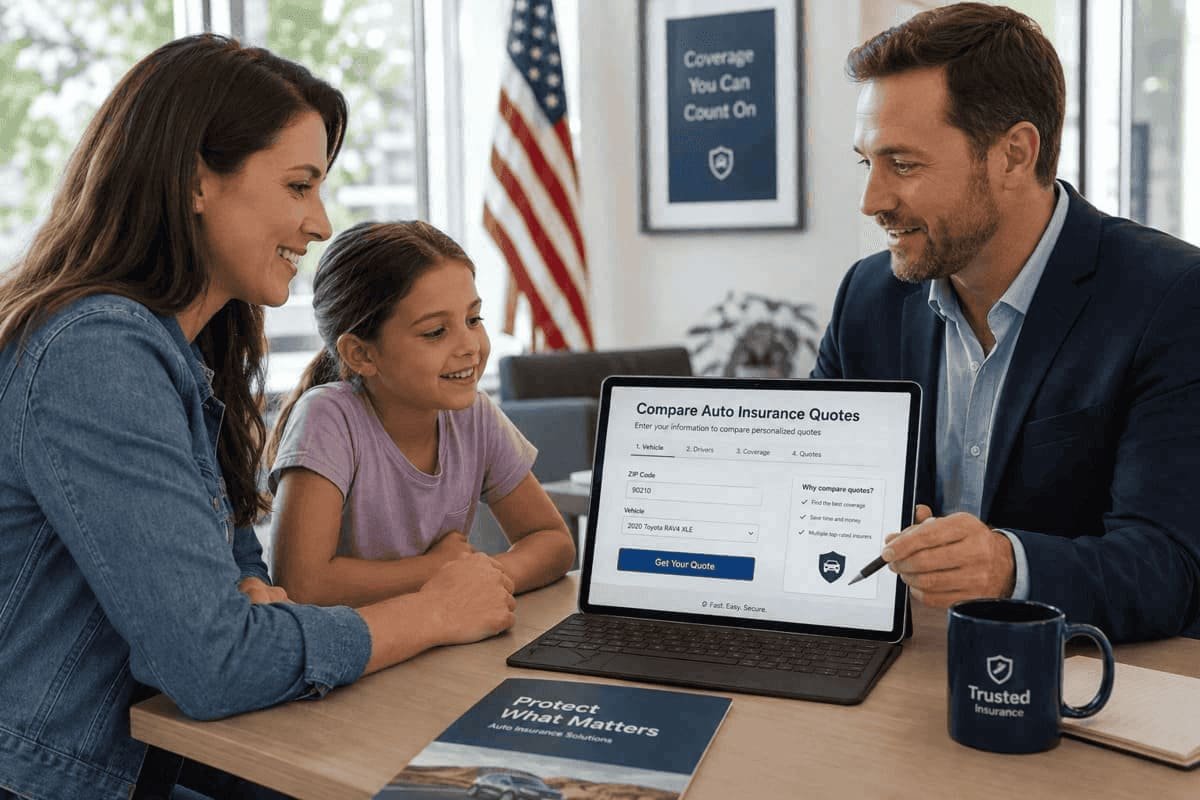
Location is one of the factors insurers may use when underwriting and rating auto coverage. The NAIC auto insurance consumer guide lists geographic territory along with driving record, vehicle use and vehicle type among common rating considerations. State law can limit or change which factors are permitted, so ZIP-based pricing does not work exactly the same way in every state.
A ZIP code is a practical way to begin a local comparison, but it is not a complete insurance rate. An insurer may use the full garaging address or a more detailed geographic territory, and two drivers in the same ZIP can still receive very different premiums because their records, vehicles, mileage, household drivers, prior insurance, coverage, deductibles and discounts differ.
Use this guide when you want to compare local auto insurance rates by ZIP code with matched policy details. If you want to request and normalize individual offers, use the auto insurance quote by ZIP code guide. If you want broad pricing context rather than a matched quote comparison, review average auto insurance cost by ZIP code.
ZIP Code Is Only One Auto Insurance Rating Factor
Auto insurance rates by ZIP code can reflect local risk patterns, but the location should be evaluated inside the complete application. A strong comparison keeps the major non-location inputs consistent so one quote is not made artificially cheaper by changing the policy itself.
| Rating factor | What insurers may review | How to keep quotes comparable |
|---|---|---|
| Location | Garaging address, geographic territory, traffic, theft, weather, repair costs, claim patterns and state rules. | Use the same truthful location and effective date for each quote. |
| Drivers | Age, experience, licenses, violations, accidents, claims and regular household operators. | List the same drivers and history accurately with each insurer. |
| Vehicle | VIN, make, model, trim, value, repair characteristics, safety equipment, ownership and financing. | Use the same vehicle and financing information for every comparison. |
| Use and mileage | Annual mileage, commute, business use, rideshare, delivery, parking and regular driver assignment. | Use one realistic mileage estimate and the same use classification. |
| Coverage | Liability, UM/UIM, medical-related coverage, collision, comprehensive, optional protection and deductibles. | Match every selected coverage, limit and deductible before comparing price. |
| Discounts and payment | Bundling, telematics, mileage, safety, payment method, autopay, paid-in-full and other available credits. | Count only discounts actually applied and compare the complete term rather than one monthly payment. |
Garaging ZIP vs. Mailing ZIP vs. Work ZIP
The garaging address is the location where the vehicle is normally kept, especially overnight. That location is generally more relevant to the auto policy than an employer, post-office box, billing address or temporary address. Use the truthful information requested by the insurer instead of searching for a nearby ZIP that happens to show a lower first-screen price.
Use the ZIP tied to the place where the insured vehicle is normally kept overnight.
A billing or mailing location can differ from the vehicle location and should not replace accurate garaging information.
The workplace may affect commute information, but it is not normally the correct substitute for where the car is garaged.
Ask the insurer how to report an extended temporary stay instead of guessing which address should appear on the policy.
Build a Matched Quote Baseline Before You Compare Rates
The cleanest auto insurance rate comparison by ZIP starts with one control policy. Save the driver, vehicle, address, mileage, use, coverage, deductibles, effective date and payment setup, then recreate that baseline with each insurer. Only after the quotes are matched should you test a different deductible or optional coverage.
| Baseline item | Keep consistent | Common comparison error |
|---|---|---|
| Drivers | Named insured, household members and regular vehicle operators. | One quote omits a driver who appears on another quote. |
| Vehicle | VIN or exact year, make, model and trim, plus ownership or financing status. | One quote uses a generic model or different trim. |
| Liability | The same bodily injury and property-damage limits. | One price uses state minimums while another uses stronger limits. |
| Physical damage | Collision, comprehensive and both deductibles. | The lower quote raises a deductible or removes a coverage. |
| Optional protection | UM/UIM, medical coverage, rental, roadside and other chosen add-ons. | Extras appear in only one quote. |
| Policy timing | Effective date, policy term, first payment and payment plan. | A lower monthly payment hides a different down payment or billing structure. |
| Discounts | Only credits actually applied to the written quote. | An advertised or conditional discount is treated as guaranteed. |
If you are ready to request actual offers, use the compare auto insurance quotes by ZIP code guide to obtain and normalize quotes. Here, the goal is to understand and compare rate differences across local ZIP-based markets.
Average Cost, Local Rate and Personal Quote Are Different Numbers
An average cost can provide broad local context, but it should not be treated as the price a specific driver will receive. A local rate estimate narrows the geographic context, while a completed quote uses the applicant's actual driver, vehicle, coverage and other underwriting information.
| Number | Useful for | Do not assume |
|---|---|---|
| Average cost | Understanding broad local pricing context. | That an average equals your personal premium. |
| Local or ZIP estimate | Starting a regional rate comparison and spotting differences between areas. | That ZIP code alone determines the result. |
| Completed quote | Comparing a specific applicant, vehicle and coverage setup. | That two quotes are equivalent unless the policy details match. |
| Issued policy | Confirming the legal insurer, term, premium, limits, deductibles and effective date. | That a future renewal price or claim outcome is guaranteed. |
If your main question is the typical local price rather than a matched insurer comparison, use the dedicated average car insurance cost by ZIP code rate-lookup guide. That resource is better for broad pricing context, while this page is designed for matched rate comparison.
How Moving to a New ZIP Code Can Change Auto Insurance Rates
Moving is one of the clearest reasons to compare rates between ZIP codes because the garaging location changes while much of the policy can stay the same. Start with the current garaging location, enter the real new location and keep the driver, vehicle and coverage baseline as stable as possible. That helps separate the address change from unrelated policy changes.
The NAIC moving guidance advises consumers to update the insurer when they move and to provide information that can affect the policy, such as the new address, parking and commuting changes. A move therefore may involve more than replacing one five-digit ZIP with another.
| Change after moving | What may affect the quote | What to verify |
|---|---|---|
| New garaging area | The vehicle may fall into a different geographic rating territory. | Use the exact new address and ZIP requested by the insurer. |
| Parking changes | Street, driveway or garage parking may change exposure. | Answer parking questions accurately when they are part of the application. |
| Commute changes | Distance, frequency and annual mileage may rise or fall. | Update mileage and vehicle-use assumptions. |
| Remote work | Commute frequency may fall even if the ZIP changes. | Use a realistic annual mileage estimate. |
| State-line move | Coverage requirements, policy forms and rating rules can change. | Confirm the new-state policy before canceling old coverage. |
Can Nearby ZIP Codes Produce Different Car Insurance Rates?
Yes. Nearby addresses can produce different quotes, but there is no universal rule that the next ZIP will be cheaper or more expensive. The addresses may fall into different territories, and a move can also change parking, commute, mileage, traffic exposure or other information used by the insurer.
Compare the real addresses instead of assuming nearby ZIPs are rated the same.
Update commute, annual mileage, parking and location together.
Answer parking and garaging questions accurately if the insurer asks them.
Use the new verified address rather than a ZIP-only guess.
The useful comparison is not a national ranking of “cheap ZIP codes.” It is whether the truthful local rating inputs change your own matched quote and whether another insurer becomes more competitive for the same policy setup.
Compare Liability and Full-Coverage Rates on the Same Basis
“Full coverage” is not a standardized policy name. It commonly describes liability plus collision and comprehensive, but actual policies can differ in UM/UIM, medical-related coverage, rental reimbursement, roadside assistance, deductibles and other options. That is why a ZIP-based price comparison must identify what each quote actually includes.
| Coverage setup | What to compare | Useful next step |
|---|---|---|
| Liability-focused | Liability limits, required or selected UM/UIM and medical-related coverage, fees and term cost. | Review the cheap liability auto insurance guide before weakening limits only to reduce the quote. |
| Liability + comprehensive | Comprehensive deductible, covered non-collision losses and vehicle value. | Compare whether the extra protection matches local theft, weather and vehicle-value concerns. |
| Collision + comprehensive | Both deductibles, financing requirements, replacement ability and complete premium. | Use the affordable full-coverage auto insurance guide to compare broader policy structures. |
Compare Insurance Companies Only After the Policy Is Matched
A lower ZIP-based rate does not automatically make one insurer the best company. Once your policy inputs are normalized, compare which carriers are available, the legal underwriting company, complaint information, financial information, claims access, service model, discounts and complete policy cost.
Use the best auto insurance companies by ZIP code guide when your question changes from “what do rates look like?” to “which carrier is the strongest fit?” Then use insurance company ratings by ZIP code when you want to check licensing, complaint information, financial strength and other carrier-verification signals.
For state-level context, the auto insurance by state hub separates local ZIP shopping from state requirements and state-specific market conditions. That is especially important after an interstate move.
When to Compare Auto Insurance Rates Again
Re-shopping can be useful whenever the information used to price the policy changes or when a renewal materially changes the premium. Keep current insurance active until replacement coverage is approved, paid as required and effective.
Review the new term, changed discounts, deductibles, payment structure and competing rates.
Update the garaging address, parking, commute, mileage and state information.
Use the correct VIN, financing status, annual mileage, safety equipment and coverage needs.
Compare the household using the complete driver list and accurate vehicle assignments.
Update commute, work-from-home, low-mileage, business, rideshare or delivery use.
Rebuild matched quotes before assuming a different company is automatically cheaper.
ZIP-Based Auto Insurance Comparison Checklist
| Checkpoint | Verify before choosing |
|---|---|
| Location | The complete garaging address and ZIP are accurate. |
| Drivers | Household members and regular operators are listed consistently. |
| Vehicle and use | VIN, trim, ownership, mileage, commute, business use and regular driver assignment match. |
| Coverage | Liability, UM/UIM, medical-related coverage, collision, comprehensive and add-ons are equivalent. |
| Deductibles | Collision and comprehensive deductibles are both known and affordable. |
| Discounts | Each credit is actually applied and its enrollment or renewal conditions are understood. |
| Total cost | The full policy-term premium, first payment, installments and fees are compared. |
| Effective date | Replacement coverage is active before prior insurance is canceled. |
Related ZIP Code Insurance Guides
FAQ About Auto Insurance Rates by ZIP Code
These questions cover common issues when comparing auto insurance rates by ZIP code, including local pricing, matched quotes, nearby ZIPs and moves.
Location can be part of insurance rating because geographic territories may reflect differences in claim patterns, traffic, theft, weather, repair costs and other permitted factors. The complete garaging address and the rest of the application can matter too.
Use the truthful garaging location and keep the drivers, vehicle, mileage, use, liability limits, collision and comprehensive choices, deductibles, optional coverage, effective date and payment assumptions consistent across quotes.
Use the location information requested by the insurer, including the place where the vehicle is normally garaged. A work, billing or mailing ZIP should not replace the real vehicle location simply because it shows a different price.
No. Drivers in the same ZIP can receive different premiums because driving history, vehicle, mileage, household drivers, prior insurance, coverage, deductibles, discounts and insurer methodology also affect the quote.
Yes. Nearby addresses may fall into different territories, and a move can also change parking, commute, mileage or other application details. There is no universal rule that the neighboring ZIP will be cheaper.
No. An average is broad pricing context. A personal quote uses your actual driver, vehicle, garaging location, coverage and other application information, so it can be materially higher or lower than an average.
Compare coverage limits, collision and comprehensive choices, deductibles, optional protection, full policy-term cost, payment fees, applied discounts, legal underwriting company and the policy effective date.
Yes. A move can change the geographic rating location and can also change parking, commute, mileage or state requirements. Compare the old and new truthful locations with the same core policy details to isolate the difference.
No. A lower price can come from weaker limits, higher deductibles, removed coverage, temporary discounts or a different payment structure. Compare the complete written offer rather than only the first displayed price.
Recompare before renewal and after meaningful changes such as moving, changing vehicles, adding drivers, changing mileage or use, or receiving a large rate increase. Keep existing coverage active until replacement insurance is effective.
Bottom line: use the correct garaging ZIP, compare the same policy across insurers and judge the full policy-term cost. ZIP code helps organize a local rate comparison, but the strongest decision comes from matched coverage, accurate application details and a written quote that fits your actual driver and vehicle.