
Auto Insurance Quote by ZIP Code
Get an auto insurance quote by ZIP code using the vehicle's correct garaging location and complete driver, vehicle, mileage, coverage, deductible, discount, payment, and effective-date information. Then compare other offers against that same baseline.
Enter the ZIP code where the vehicle is normally parked overnight. Save one complete baseline before changing coverage, deductibles, discounts, telematics, or payment terms.
QuotesAutoInsurance.org is independently operated and may connect users with licensed insurance partners. We do not issue policies or guarantee a particular price. Availability depends on ZIP code, state, applicant, vehicle, coverage, and partner review.
How to Compare Auto Insurance Quotes by ZIP Code
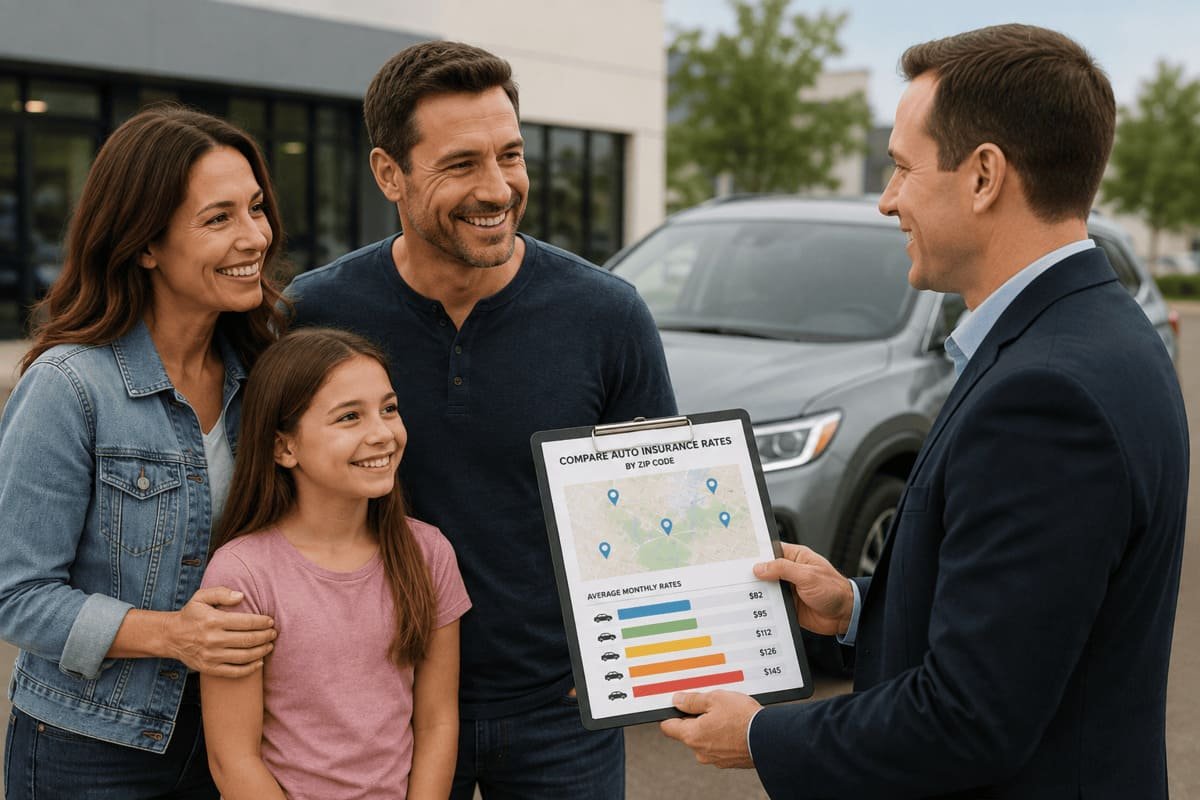
ZIP code is one of the first location inputs in an auto insurance quote, but it is not the only rating factor. The complete address, drivers, vehicle, use, mileage, prior insurance, driving history, claims, coverage, deductibles, discounts, payment terms, and effective date can also change the result.
Begin with one realistic control quote. Save it before testing a higher deductible, removing an add-on, enrolling in telematics, changing mileage, combining policies, or selecting a different payment plan.
Use the official auto insurance shopping guide for additional coverage and quote-comparison context.
How to Get the Most Accurate ZIP-Based Quote
| Input area | What to enter | Common mismatch |
|---|---|---|
| Address | Complete residence and actual overnight garaging location | Mailing, work, temporary, or neighboring ZIP used instead |
| Drivers | Named insured, household members, regular operators, licenses, accidents, violations, and claims | A spouse, teen, roommate, or regular driver is omitted or classified differently |
| Vehicle | VIN, trim, ownership, financing, safety equipment, modifications, and assigned driver | The wrong trim, model, ownership status, or primary driver is used |
| Use and mileage | Commute, annual mileage, business use, rideshare, delivery, parking, and regular trips | Mileage or use is understated to obtain a lower estimate |
| Insurance history | Current carrier, policy dates, continuous coverage, limits, claims, and lapse information | Dates or prior coverage are estimated incorrectly |
| Coverage | Liability, UM/UIM, medical, collision, comprehensive, deductibles, and optional protection | The lower quote quietly uses weaker protection |
How ZIP Codes Can Affect Auto Insurance Rates
Auto insurance rates by ZIP code can reflect local claim frequency, crash severity, theft, vandalism, weather, repair costs, litigation, traffic density, uninsured-driver exposure, and other permitted factors. Two nearby ZIP codes can fall into different rating territories or produce different combinations of local risk.
The garaging ZIP should remain accurate even when another ZIP produces a lower estimate. Misstating the address can affect underwriting, discounts, policy eligibility, billing, state compliance, and claim handling.
| ZIP-related factor | Possible pricing effect | Practical response |
|---|---|---|
| Collision frequency | More frequent local crashes can increase expected claim costs | Compare several carriers using identical liability and physical-damage coverage |
| Theft and vandalism | Higher property-loss exposure can affect comprehensive pricing | Confirm parking, anti-theft equipment, VIN data, and comprehensive deductible |
| Weather and catastrophe | Hail, wind, flood, wildfire, and falling-object exposure can affect physical-damage rates | Compare comprehensive coverage and a deductible that remains affordable |
| Repair costs | Local labor, parts, calibration, storage, and rental costs can affect claim severity | Review collision, comprehensive, rental reimbursement, and repair options |
| Traffic and commute | Dense traffic and greater road exposure can increase expected losses | Enter accurate mileage and use; review low-mileage or telematics options honestly |
Quote Difference Decoder
When two quotes show different prices, first identify the source of the gap. A carrier is not genuinely cheaper when its quote excludes a driver, uses lower limits, raises deductibles, removes optional protection, assumes a temporary discount, or displays a different payment structure.
| Difference source | What it looks like | How to verify it |
|---|---|---|
| True carrier difference | Drivers, vehicle, ZIP, use, coverage, deductibles, discounts, and payment terms match | Review the declarations-style details and complete term before treating the lower result as a genuine advantage |
| Coverage difference | The cheaper version uses lower liability or removes UM/UIM, rental, roadside, glass, or other protection | Rebuild both quotes with the same selections |
| Deductible difference | The lower premium uses a higher collision or comprehensive deductible | Compare the premium change with the additional amount due after a claim |
| Driver or vehicle difference | A household driver, vehicle, VIN, use, mileage, financing detail, or violation is missing | Correct every application field and obtain an updated quote |
| Discount difference | One result assumes telematics, bundling, autopay, paperless, paid-in-full, membership, or continuous insurance | Confirm eligibility, documentation, enrollment, duration, and renewal treatment |
| Payment difference | The monthly amount appears lower while the first payment, installments, fees, or policy term differ | Compare the full policy-term premium and every required payment |
| Quote-stage difference | One result is an early estimate and the other has completed more verification | Compare again after records and application information have been reviewed |
Coverage and Deductible Matching Matrix
| Coverage area | What should match | Why the comparison changes |
|---|---|---|
| Bodily injury liability | Per-person and per-accident limits | Lower limits can reduce premium while increasing personal exposure |
| Property damage liability | Per-accident limit | A lower limit can make the quote look cheaper |
| UM/UIM | Limits, stacked or non-stacked treatment, and rejection selections where applicable | Removing or reducing it can materially change protection |
| Medical or PIP | Limits, deductible, exclusions, coordination, and state-required elections | State structures and elections can create significant quote differences |
| Collision | Included or excluded status and deductible | A higher deductible or removed coverage lowers premium but increases vehicle-loss exposure |
| Comprehensive | Included or excluded status, deductible, and glass treatment | Theft, flood, hail, fire, vandalism, and other non-collision losses depend on this selection |
| Optional protection | Rental, roadside, payoff, custom equipment, accident forgiveness, and other available options | Small add-ons can produce a real coverage and premium difference |
Before changing protection, review the auto coverage guide and the discount eligibility checklist. Keep the original quote unchanged while testing each adjustment separately.
Estimate, Verified Quote, and Issued Policy
Not every displayed price is at the same stage. An early estimate may use partial information, while a later quote may include driver, vehicle, claims, insurance-history, address, or discount verification.
Uses the information entered so far and may change as additional application details are collected.
Includes selected coverage and more complete driver, vehicle, address, history, and payment information.
Reflects corrections or checks performed before the insurer is ready to issue the policy.
Shows the legal insurer, policy term, effective date, covered drivers and vehicles, premium, limits, deductibles, and endorsements.
Discount and Telematics Verification
A discount should be counted only after it appears in the quote and all eligibility conditions are understood. A possible or advertised saving is not the same as an applied credit.
| Discount area | What to confirm |
|---|---|
| Driving history | Required accident-free or violation-free period and how incidents affect renewal |
| Vehicle equipment | Exact VIN equipment, anti-theft, airbags, braking systems, and the coverage portion affected |
| Multi-car or multi-policy | Which vehicles or policies must remain active and how the total household cost compares |
| Payment and documents | Autopay, paperless, paid-in-full, advance shopping, installment fees, and renewal requirements |
| Telematics | Participation, measured behavior, phone use, mileage, privacy, trip correction, and possible renewal impact |
| Affinity or training | Membership, employment, military, student, defensive-driving, or other proof requirements |
When to Compare Quotes Again
Compare early enough to verify records, discounts, payment terms, and the replacement effective date.
Update the actual residence and garaging address rather than retaining the previous ZIP.
Recompare when repair cost, safety equipment, financing, value, use, or annual mileage changes.
Add or remove drivers, vehicles, residences, marriages, licenses, and regular operators accurately.
Review options as accidents, violations, claims, suspensions, or prior lapses age or leave rating periods.
Update commute, work-from-home, low-mileage, business, rideshare, delivery, and seasonal use.
Related ZIP Code and Quote Comparison Guides
FAQ About Auto Insurance Quotes by ZIP Code
Insurers may use approved rating territories that reflect local claim frequency, crash severity, theft, repair costs, weather, traffic, and other permitted factors.
No. Use the correct residence and garaging address. Misstating where the vehicle is normally kept can affect underwriting, policy validity, compliance, and claims.
Match drivers, household members, vehicle, VIN, garaging address, mileage, use, liability limits, physical-damage coverage, deductibles, optional coverage, discounts, and payment terms.
No. The lower result may use weaker limits, higher deductibles, missing drivers, removed add-ons, temporary discounts, or a different payment structure.
Yes. The price or eligibility can change when driver, vehicle, address, claims, insurance history, coverage, discount, or other underwriting information is corrected or verified.
Review options before renewal and after meaningful changes such as moving, adding drivers, replacing a vehicle, changing mileage, or updating vehicle use.
A practical starting point is three to five materially different insurers or quote paths. Keep the drivers, vehicle, garaging ZIP, mileage, use, coverage, deductibles, payment assumptions, and effective date consistent.
Full coverage is not a standardized policy name. It commonly means liability plus collision and comprehensive, but uninsured motorist, medical-related, rental, roadside, glass, and other options may be included or omitted.
A higher collision or comprehensive deductible may reduce the premium, but the reduction is not guaranteed and the driver accepts more out-of-pocket exposure after a covered loss.
Yes. Use a realistic future effective date and compare before the current policy expires. Do not cancel existing coverage until the replacement policy is accepted, paid, issued, and confirmed active.
Bottom line: use the correct garaging ZIP, preserve one complete baseline, match every driver, vehicle, coverage, deductible, discount, and payment term, decode the reason for any price gap, and confirm the issued policy before replacing existing coverage.