
Accessing Farmers Insurance: A Guide for New Immigrants
For many new immigrants, insurance can seem confusing at first. Farmers Insurance offers clear and flexible options to help protect your car, home, and personal belongings as you settle into daily life in the United States.
This guide explains how to get coverage, what documents you will need, how pricing works for newcomers, and which discounts you may qualify for. Accessing the right options with the right steps helps you choose a policy that fits your situation and your budget.
Key Steps for New Immigrants to Get Covered
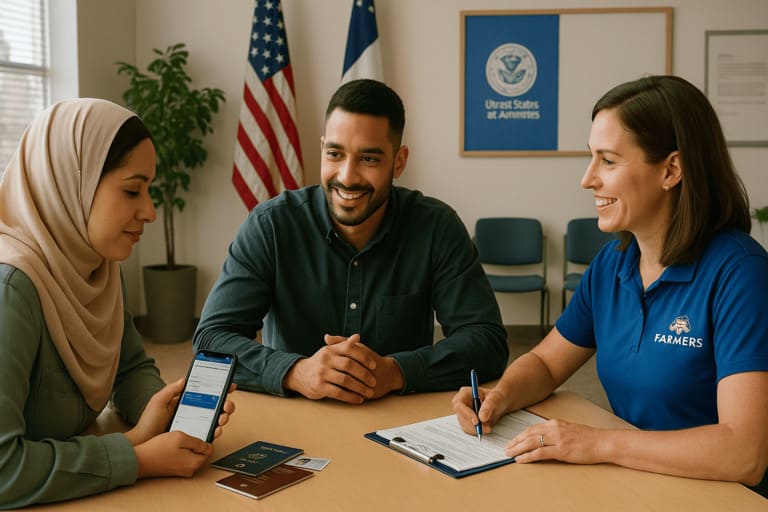
Start by gathering your identification (passport, state ID, or consular ID), proof of residency, and basic details about your home or vehicle. Farmers often works with new arrivals and can accept alternative documents in many situations. If you plan to purchase a home soon, review coverage considerations for first-time buyers.
Next, compare policy options and look for discounts. A quick online quote will show estimated monthly pricing and what information you need to provide. You can begin with a Farmers Insurance quote and review the coverage types offered in your area.
Get Auto Insurance Quotes
Compare auto insurance plans instantly.
Get Home or Renters Insurance Quotes
Compare home and renters insurance side by side.
How Pricing Works for Newcomers
Insurance prices depend on where you live, what you drive, and your past driving or claims history. New immigrants may not have U.S. driving records yet, so rates can start a bit higher. This is normal and usually improves over time.
Telematics programs track safe driving — gentle braking, steady speed, and low-risk driving times. Joining these programs can reduce your premium sooner. If you have proof of safe driving from your home country, provide it during the quote process. In some cases, Farmers will consider it.
Typical Insurance Document Requirements
Having documents ready helps avoid delays and price changes during setup.
| Policy Type | Required Documents | Optional for Discounts |
|---|---|---|
| Auto | ID, proof of residency, VIN, prior insurance history (if any) | Telematics, safe-driving history |
| Homeowners | Property address and details | Security system verification |
| Renters | Lease agreement | Multi-policy discount |
Choosing Coverage Limits and Deductibles
Higher liability limits help protect your savings and future income. For personal belongings, replacement cost coverage ensures you receive enough to replace items rather than their depreciated value.
If you plan to buy a car soon, most lenders require collision and comprehensive coverage before approving financing. This makes comparing quotes important because insurance costs can affect your total monthly budget.
For renters or those temporarily staying with family, affordable personal property protection can be added through renters insurance. This covers belongings like clothing, electronics, and household essentials—even if you take them with you when traveling. Some newcomers compare these small but important differences through independent marketplaces like The Zebra insurance comparison, which makes it easier to see how rates shift based on location and coverage limits.
Practical Steps to Save While Settling In
Your first insurance rate is not permanent. As you build driving history and stable residency, rates often decrease. Re-check pricing every 6–12 months to ensure you’re saving where possible.
If you rent, bundling auto and renters insurance is one of the easiest ways to lower your monthly premium early on.
Frequently Asked Questions
Do I need a U.S. driver's license to get auto insurance?
Some states allow foreign or international licenses. Check your state’s rules.
Can I lower my premium?
Yes. Bundling, telematics, and safe-driver habits help reduce costs over time.
How fast can I get proof of coverage?
You usually receive digital ID cards right after your policy is activated.