
Farmers RV Insurance for Motorhomes and Travel Trailers
Farmers RV insurance is easiest to judge after one question is answered first: what kind of RV do you own, and how do you actually use it? A self-propelled motorhome, a travel trailer and a fifth wheel do not create the same insurance setup. The strongest Farmers comparison starts with RV type and usage, then checks physical damage, installed accessories, personal belongings, liability while parked, towing, emergency expenses, full-time living needs, seasonal storage and the final policy-term cost.
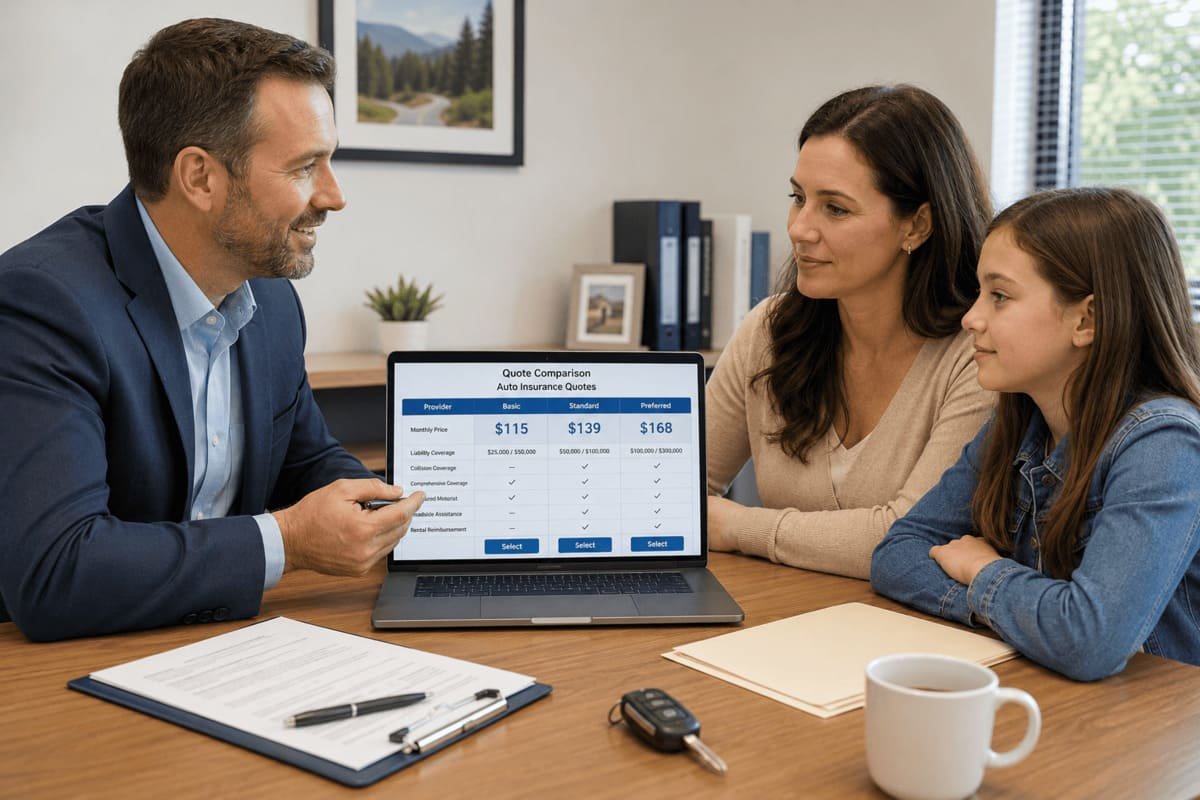
These forms compare auto and home insurance, not a Farmers RV policy directly. Use the auto form for the household vehicle or tow vehicle and the home form for the residence or bundle baseline, then obtain the specialized RV terms separately. That keeps a home or auto quote from being mistaken for motorhome, travel trailer or fifth wheel coverage.
Compare the tow vehicle or household car using the actual garaging ZIP, drivers, limits and deductibles. Keep the RV policy separate until its specialized coverages are matched.
A tow-vehicle auto policy is not a substitute for physical-damage or dwelling-style protection on the RV itself.
Compare your residence separately if you want to test a household multi-policy setup. Do not assume the homeowners policy protects the RV as a vehicle or residence on wheels.
Test the household bundle only after the RV policy keeps the specialized protection you need.
Travel trailer or camper trailer.
Fifth wheel or other towable RV.
Long-distance travel.
Full-time or extended dwelling use.
Personal belongings and liability.
Emergency expense and towing.
Lay-up or multi-policy savings.
Full policy-term cost.
Is Farmers RV Insurance a Good Fit? Start With the RV Type
Farmers currently separates recreational vehicle insurance into product routes that include motor homes, travel trailers and fifth wheels. That matters because a motorhome is self-propelled and combines vehicle and living-space risks, while a travel trailer or fifth wheel is towed and can create a different liability and physical-damage structure. A generic car or homeowners policy should not be treated as interchangeable with specialized RV insurance.
Farmers' RV and motor home insurance materials describe direct and accidental physical-damage protection and optional features designed around the way RVs are used as both transportation and living space. Use that product structure as the starting point, then verify the exact form available in your state.
Motorhome, Travel Trailer or Fifth Wheel: Do Not Mix the Policy Routes
A Class A, B or C motorhome can need liability and physical-damage protection that reflects a self-propelled vehicle. A travel trailer depends on a tow vehicle, while a fifth wheel has a different hitch and towing configuration. Farmers publishes separate product information for these categories because the loss exposures and available optional coverages can differ.
For shoppers, that creates three distinct Farmers product searches: Farmers motorhome insurance, Farmers travel trailer insurance and Farmers fifth wheel insurance. Compare the route that matches the unit you actually own instead of treating all recreational vehicles as one interchangeable policy.
| RV type | Main Farmers route to verify | Coverage questions to ask |
|---|---|---|
| Motorhome / motor coach | RV & Motor Home Insurance | Physical damage, liability, total loss replacement, roadside assistance, emergency expense, personal belongings and full-timer use. |
| Travel trailer / camper trailer | Travel Trailer Insurance | Trailer physical damage, attached accessories, campsite liability, personal belongings, roadside help, full-timer liability and towing-vehicle interaction. |
| Fifth wheel | Fifth Wheel Insurance | Physical damage, attached accessories, liability while parked, personal belongings, roadside assistance and extended dwelling use. |
For the ordinary car or tow-vehicle side of the household, use a Farmers auto insurance quote as a separate baseline. The Farmers quote page owns the broader auto/home/life quote intent; this RV page should stay focused on recreational vehicle fit.
Physical Damage Is the Base Layer for the RV Itself
Farmers' current motorhome and travel trailer pages describe protection for direct and accidental physical damage from events that can include collision, lightning, flooding, landslides, wind and hail, fire and smoke, vandalism, theft and damage from trees or overhangs. The policy language controls, but the key comparison point is clear: specialized RV coverage is meant to protect the actual recreational vehicle, not only liability from the vehicle that tows it.
When you compare quotes, use the same RV year, make, model, current value and installed equipment. For financed RVs, also verify lender requirements. A lower quote can be misleading if one version uses a weaker valuation method or a higher physical-damage deductible.
Total Loss Replacement Is Most Important on a Newer RV
Farmers currently lists Total Loss Replacement coverage as an optional feature for qualifying new motorhomes and travel trailers. Its public materials say this option can provide a brand-new replacement of similar kind and quality when a qualifying new RV is declared a total loss within the first five years.
That feature should be compared against the RV's age and depreciation. If the unit no longer qualifies, ask what valuation applies instead. The phrase “replacement” can mean very different things depending on whether the policy uses total loss replacement, replacement cost, agreed value, actual cash value or another settlement method.
Installed Accessories Need Their Own Inventory
RVs often gain value after purchase because owners add awnings, bike racks, cargo carriers, satellite equipment, generators, upgraded electronics and other accessories. Farmers says RV policies can cover attached or installed accessories, and its consumer guidance recommends listing accessories individually when necessary so the policy reflects the RV as it exists today.
Build an accessory list before the final quote. Record the item, installed cost, replacement cost and a photo. If a major upgrade is added later, tell the insurer instead of assuming it automatically falls under the original RV value.
| RV item | What to document | What to verify |
|---|---|---|
| Awnings, racks and exterior attachments | Purchase receipt, installation record and photos. | Whether the item is automatically included or needs to be listed. |
| Generator or electrical upgrades | Model, cost and installation details. | How the equipment is valued after covered damage. |
| Satellite, entertainment or electronics | Receipts and serial numbers where practical. | Whether the item is an attached accessory or personal property. |
| Portable camping gear | Inventory and approximate replacement cost. | Whether it belongs under contents or personal-belongings protection. |
Personal Belongings Need a Different Check From Installed Accessories
Farmers distinguishes attached accessories from personal property carried in the RV. Its RV guidance says replacement cost coverage may be available for damaged or stolen personal belongings, while separate contents protection can apply to items such as outdoor furniture, portable grills, small appliances and other property that is not permanently installed.
Do not count the same item twice. An installed generator and a portable generator may fall into different categories. High-value property can also need separate listing or a higher limit. Compare the personal-property limit against what actually travels with you instead of selecting a round number with no inventory behind it.
Full-Time RV Living Changes the Liability Question
A weekend motorhome and an RV used as a primary or extended residence do not create the same risk. Farmers currently offers Full-Timer coverage for motorhomes and Full-Timer Liability coverage for certain towable RVs, designed to extend personal liability protection while the RV is parked and being used as a dwelling or recreational residence.
If you spend long periods living in the RV, disclose that use. Confirm whether the policy treats the unit as part-time recreational use, seasonal living or full-time dwelling use. Also verify how liability responds when a visitor is injured at the campsite or around the parked RV.
Campsite Liability Matters Even When the RV Is Not Moving
Farmers lists Campsite or Vacation Liability as an optional protection that can help when a motorhome, travel trailer or fifth wheel is parked and being used as a vacation residence. That is a different exposure from a collision on the highway: someone can be injured by a step, awning, campsite setup or activity around the unit while it is stationary.
Compare the liability limit with the amount of time you spend in campgrounds and how the RV is used. Full-timers should also ask how full-timer liability and campsite liability interact so there is no accidental gap between travel mode and dwelling mode.
Emergency Expense Protects the Trip, Not Just the RV
Farmers currently lists Emergency Expense coverage that can help with lodging or travel costs when a covered RV loss occurs more than 50 miles from home. That feature can be valuable because an RV claim can create two losses at once: damage to the unit and an immediate need for transportation or temporary accommodation.
Before buying, confirm the dollar limit, distance trigger, covered expenses and duration. A family traveling several states away may need a different emergency-expense limit than an owner who camps close to home.
TraveLine Roadside Assistance Is an RV-Specific Mobility Check
Farmers offers TraveLine towing and roadside assistance for RV policies. Its public materials describe services that can include towing, tire changes, fluid delivery and locksmith help. For a large motorhome or fifth wheel, the important question is not simply whether roadside coverage exists but whether the towing and service limits fit the size and configuration of the RV.
Check towing distance, service limits and the process for dispatching a provider that can handle a large recreational vehicle. A cheap roadside add-on can be less useful if the available towing arrangement cannot move the unit to an appropriate repair facility.
Seasonal Storage Should Not Automatically Mean Dropping Coverage
Farmers' 2026 recreational-vehicle claims guidance recommends maintaining protection even when a recreational vehicle is stored, because theft, fire, vandalism, storm damage and other losses can still occur during the off-season. Farmers also says a Lay-Up Discount may be available on some policies for qualifying vehicles stored for at least part of the year.
For a seasonal RV, compare the cost of year-round protection with any available storage or lay-up pricing rather than simply deleting physical-damage coverage for winter. Ask what use is allowed during the lay-up period and what happens if your travel plans change unexpectedly.
Bundle the RV Only After the RV Coverage Is Matched
Farmers says RV coverage can be bundled with auto, home or renters policies in some situations, and multi-policy discounts vary by state and policy type. The clean comparison is to price the RV correctly first, then add household policies and see whether the combined total improves without weakening any RV-specific protection.
If home coverage is part of the household review, a separate Farmers home insurance quote on our homeowners project can help you compare dwelling limits, deductibles and Farmers home pricing before you judge the multi-policy total.
Canada and Mexico Need Different Travel Checks
Farmers currently says its RV coverage remains in force in Canada in the same general way it does in the United States. Its public guidance for Mexico is more limited, including distance and time restrictions, and recommends arranging additional coverage for longer or farther travel.
If cross-border travel is part of your normal RV use, confirm the current territorial language before departure. Do not rely on an old trip, forum post or assumption that Canada and Mexico are treated the same way.
Compare Another Carrier Only After the Farmers RV Baseline Is Complete
Once the Farmers version is matched, compare another carrier with the same RV type, use, settlement basis, liability, belongings, roadside and full-timer settings. If you want a broad second-carrier benchmark on this site, review Progressive auto insurance quotes, but keep in mind that a generic auto/home quote page is not a substitute for a specialized RV quote.
| Comparison item | Keep the same first | Why it matters |
|---|---|---|
| RV type and use | Motorhome, travel trailer or fifth wheel; part-time, seasonal or full-time use. | Different use can change available coverage and liability needs. |
| Physical damage | Same valuation method and deductible. | A cheaper quote may pay differently after a total loss. |
| Accessories | Same installed accessory inventory and values. | Unlisted upgrades can make quote totals incomparable. |
| Personal belongings | Same contents or replacement-cost limit. | RV owners often carry more property than a normal passenger vehicle. |
| Liability while parked | Same campsite or full-timer liability setup. | Living-space exposure exists even when the RV is stationary. |
| Trip interruption | Same emergency expense and roadside options. | Claim-time travel costs can be significant far from home. |
| Total price | Same policy term and payment structure. | Monthly payment alone can hide fees or a different policy period. |
Farmers RV Insurance Checklist Before You Buy
| Final check | What to confirm |
|---|---|
| RV category | The policy is written for the actual motorhome, travel trailer or fifth wheel. |
| Usage | Seasonal, weekend, extended or full-time dwelling use is disclosed correctly. |
| Physical damage | The valuation method, deductible and covered-loss structure are understood. |
| Total loss protection | Eligibility and settlement terms for total loss replacement are confirmed if relevant. |
| Accessories | Attached or installed upgrades are listed and valued accurately. |
| Personal belongings | Contents or replacement-cost coverage reflects the property carried in the RV. |
| Liability | Campsite, vacation or full-timer liability matches how the RV is used while parked. |
| Emergency expense | Distance trigger, limit and covered lodging/travel expenses are understood. |
| Roadside assistance | Towing and service limits can realistically handle the RV. |
| Storage | Year-round protection and any lay-up discount are checked before reducing coverage. |
| Travel territory | Canada and Mexico rules are verified before cross-border travel. |
| Bundle value | RV, auto and home totals are compared only after coverage is matched. |
Bottom line: Farmers can be a strong RV option when its specialized policy fits the exact unit and travel pattern. The decision becomes much clearer when you match RV type, usage, valuation, accessories, personal belongings, parked liability, roadside help, full-time needs and storage first—then compare the total price.
FAQ: Farmers RV Insurance
These questions focus on Farmers motorhome, travel trailer and fifth wheel insurance, including full-time use, accessories, storage and road-trip protection.
Yes. Farmers currently offers specialized recreational vehicle insurance for motor homes, travel trailers and fifth wheels, subject to state availability, underwriting and the actual policy terms.
Do not assume so. Farmers says a motor home or travel trailer can need specialized coverage because an ordinary auto or home policy may not provide the protection an RV owner wants.
Farmers describes physical-damage protection for covered RV losses and offers optional protections that can include total loss replacement, emergency expense, campsite or vacation liability, personal belongings replacement cost, towing and roadside assistance, and full-timer coverage depending on the RV type and policy.
Yes. Farmers has separate public product routes for motor homes, travel trailers and fifth wheels. The correct route depends on whether the RV is self-propelled or towed and how it is used.
Farmers describes Full-Timer coverage as liability protection for an RV that is parked and used as a dwelling for an extended period. The exact form and eligibility should be confirmed for the motorhome, travel trailer or fifth wheel being insured.
Farmers says attached or installed accessories can be covered, but some accessories should be listed individually on the policy. Owners should document awnings, generators, electronics, cargo carriers and other upgrades and confirm how each item is valued.
Farmers offers TraveLine towing and roadside assistance as an optional RV coverage. It can include services such as towing, tire changes, fluid delivery and locksmith help, subject to policy terms.
Farmers recommends keeping recreational vehicle protection in place during storage because theft, fire, vandalism and weather losses can still occur. Farmers also says a Lay-Up Discount may be available on some policies for qualifying seasonal storage.
Farmers currently says its RV policy remains in force in Canada as it does in the United States. Its public guidance says Mexico coverage is more limited and should be reviewed with an agent before travel, especially for trips farther from the border or longer stays.
First match the RV type and actual use, then compare physical-damage coverage, accessories, personal belongings, liability while parked, emergency expense, towing, full-timer needs, deductibles and the complete policy-term premium. Compare another carrier only after those settings are aligned.