
State Farm Rental Property Insurance
The first question for a rental property is not “how cheap is the policy?” It is “which State Farm property form actually matches the building and the way it is rented?” A rental house, a rented condo, an apartment building and a short-term host property can create different coverage needs. Start with property type and occupancy, then verify dwelling or building protection, landlord-owned property, loss of rents or loss of income, liability, deductibles, exclusions and any available discounts before you compare the final premium.
Use the actual property ZIP for a home or property quote and the garaging ZIP for auto insurance. If the property is rented to others, disclose that occupancy accurately when the quote provider asks; a standard owner-occupied home quote is not a substitute for a landlord or rental-property policy.
Start a property quote comparison by ZIP, then confirm whether the carrier accepts the actual rental use and which landlord or rental-property form applies.
Use the quote as a comparison starting point. Rental dwelling, rental condo and commercial-landlord eligibility must be confirmed for the actual property.
Compare auto separately if you want to test household pricing or a possible multi-policy setup. Keep vehicle use, drivers, limits and deductibles consistent.
A bundle should be judged on the combined annual cost only after both policies keep the protection you actually need.
Rented condo unit.
Apartment or larger landlord risk.
Seasonal or short-term use.
Owner occupancy vs. business use.
Landlord-owned property.
Loss of rents and liability.
Wear, leakage and tenant property.
Alerts, monitoring and other credits.
Start With the State Farm Rental Property Type, Not a Standard Homeowners Policy
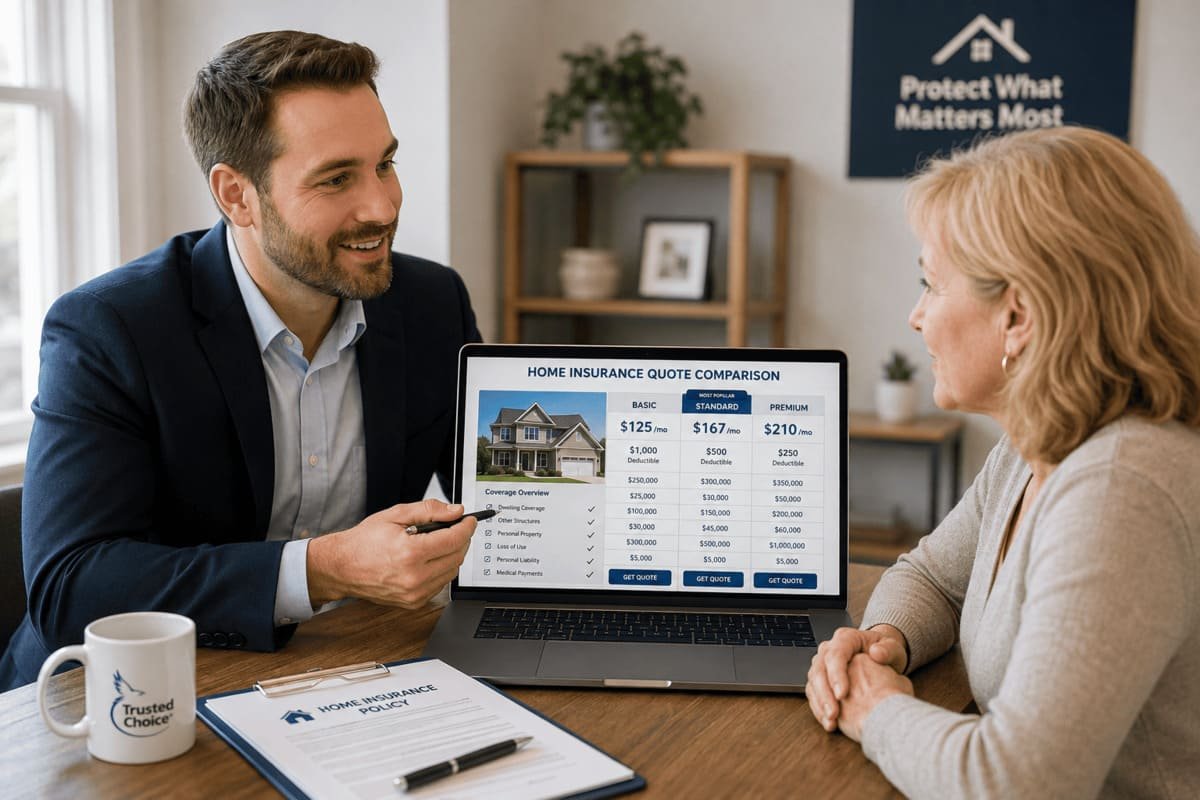
State Farm currently separates rental property insurance from ordinary owner-occupied homeowners insurance. Its public rental-property materials describe dedicated routes for rental homes, rental condo units and commercial or residential landlords. State Farm also notes that, in most cases, a standard homeowners policy does not cover a property after it becomes a rental because the use has changed and the property is being treated as a business asset.
That is why the cleanest owner intent for this page is policy matching. Use State Farm's rental property insurance overview to confirm the current product categories, then use this guide to decide what details should be matched before comparing a quote.
Rental House, Rental Condo or Apartment Building?
State Farm's current product structure makes the property form the first routing decision. A single-family rental home does not necessarily belong on the same policy form as a condo unit that is rented full time, and a larger apartment or commercial landlord operation can require a business-oriented policy.
| Rental situation | State Farm route to verify | Core items to compare |
|---|---|---|
| Rental house, duplex or similar residential dwelling | Rental Dwelling policy | Dwelling, other structures, landlord-owned personal property, loss of rents, liability, deductible and exclusions. |
| Condo unit rented out full time | Rental Condo Unitowners policy | Unit building property, furnishings or other covered owner property, liability, loss of rents, loss assessment and deductible. |
| Apartment building or broader landlord business | Commercial or residential landlord business coverage | Buildings, owned property, liability, equipment breakdown, loss of income and any apartment-specific options. |
| Short-term, seasonal or platform-host use | Agent and underwriting review | Exact occupancy, frequency of rentals, guest use, business activity, liability, platform protection and policy exclusions. |
For broader carrier shopping rather than rental-property form selection, compare State Farm auto insurance quotes. That page owns the general State Farm quote intent; this page stays focused on rental-property and landlord coverage.
What the State Farm Rental Dwelling Policy Is Designed to Cover
For a rental home, State Farm describes its Rental Dwelling policy as coverage for accidental direct physical loss to the rental dwelling and covered landlord-owned personal property, subject to the actual policy. Its current public materials identify four especially important areas: dwelling protection, landlord-owned personal property, loss of rents and liability.
Helps pay for covered repair or reconstruction of the rental dwelling and other structures when the policy applies.
Can cover certain furniture or other property supplied with the rental or used to maintain it.
Can reimburse fair rental value when a covered insured loss makes the rental dwelling uninhabitable.
Helps protect the owner against covered liability claims and lawsuits arising from the property.
Loss of rents is not the same thing as guaranteeing that a tenant will pay rent. The trigger described by State Farm is a covered property loss that makes the dwelling uninhabitable. Ordinary nonpayment, vacancy or a tenant leaving early should not be treated as the same coverage event unless the policy specifically says otherwise.
Rental Condo Coverage Has a Different Building Responsibility
A rented condominium creates a different property boundary because the condo association can insure parts of the building while the unit owner remains responsible for other parts. State Farm's Rental Condo Unitowners policy is designed for a condo rented out full time and can address the unit owner's building property, covered personal property, liability and loss of rents.
| Condo item | What to verify | Why it matters |
|---|---|---|
| Building property | Wall finishes, floor coverings, fixtures, alterations, appliances and other items the unit owner must insure. | The association master policy and the unit policy do not always divide responsibility the same way. |
| Landlord furnishings | Furniture or equipment that belongs to the owner rather than the tenant. | Tenant property is not the landlord's insured property. |
| Loss assessment | How assessments from the condo association are handled after a covered event. | A unit owner can face an association assessment even when damage extends beyond the unit. |
| Loss of rents | Whether covered damage that prevents leasing can trigger rental-value protection. | Lost rent can become a major part of the financial loss after serious property damage. |
Also review the condo association bylaws before assuming the unit can be rented without restriction. State Farm itself notes that an association may limit how many units can be designated as rentals at one time.
Apartment Owners and Larger Landlords Need a Business-Risk Check
State Farm has a separate business insurance route for commercial and residential landlords. Its current materials describe protection for buildings and other structures, owned property used to maintain the premises, liability, equipment breakdown and loss of income. Apartment owners can also have access to specialized options such as tenant move-back expenses or certain heating and air-conditioning loss reimbursement features, depending on the policy.
The key distinction is scale and business activity. A one-unit rental house and an apartment building are not interchangeable exposures. If the property has multiple units, commercial operations, on-site equipment, employees or other business features, ask the agent which business or landlord form is intended for the risk before comparing premium.
Because insurance regulation and product availability vary by jurisdiction, confirm the rules and product availability for the state where the rental property is located before comparing premium.
Short-Term and Vacation Rental Use Should Be Disclosed Before You Assume Coverage
The current public State Farm rental-property pages clearly describe rental homes, rental condos and commercial or residential landlords, but they do not promise that every short-term or platform-host arrangement fits one identical policy form. Frequent guest turnover, partial owner occupancy, seasonal use and business activity can materially change underwriting.
Useful questions include how often the property is rented, whether the entire home or only part of it is rented, whether the owner also lives there, whether guests receive services, whether the property is vacant between bookings and whether any platform protection is primary, secondary or limited.
Build the Coverage Around the Loss You Would Actually Need to Survive
A landlord quote is easier to evaluate when each coverage line is tied to a realistic loss. Start with the cost to repair or rebuild the structure, then add the property you own, the rental income you could lose after covered damage and the liability exposure created by tenants, guests, contractors and common areas.
| Coverage area | Question to answer | Common comparison mistake |
|---|---|---|
| Dwelling or building | What would it cost to repair or reconstruct the insured building under the policy valuation method? | Using market value or purchase price as if it were automatically the rebuild amount. |
| Other structures | Which garages, sheds, fences or detached structures are part of the insured premises? | Assuming every detached structure has the same limit. |
| Owner personal property | What furniture, appliances or maintenance property belongs to the landlord? | Mixing landlord property with tenant belongings. |
| Loss of rents or income | How much rent could be lost while the property is uninhabitable after a covered loss? | Treating loss-of-rents coverage as protection against ordinary tenant nonpayment. |
| Liability | How much protection is needed if a tenant, guest or other person alleges injury or property damage? | Choosing the lowest limit simply to reduce premium. |
| Deductible | How much cash could the owner pay quickly after a covered property loss? | Raising the deductible without measuring the claim-time cost. |
Know the Important Rental Dwelling Exclusions Before You Compare Price
State Farm's current Rental Dwelling materials give examples of losses that are not insured, including continuous or repeated seepage or leakage, flood or underground water, earth movement such as earthquake or landslide, and damage caused by settling, deterioration, contamination, nuclear hazard, birds, rodents, insects or domestic animals. The actual policy controls, so this list is a starting point rather than a substitute for the contract.
Flood deserves a separate review because water from a river, storm surge or other flooding is not the same as a covered sudden plumbing loss. Earthquake can also require separate protection. If the property sits in a high-risk area, compare the property policy together with any separate catastrophe coverage before judging the total insurance cost.
Tenant Property Is Not the Same as Landlord Property
State Farm's rental-property materials distinguish the landlord's insured interest from the tenant's belongings. A Rental Dwelling or Rental Condo policy can protect certain property owned by the landlord, but it does not automatically insure the tenant's furniture, electronics, clothing and other personal possessions.
Tenants should consider their own renters insurance for personal property, loss of use and personal liability. From the landlord's perspective, requiring proof of renters insurance can be part of lease management, but it does not replace the landlord's own building and liability coverage.
Discounts Should Be Verified on the Rental Property Policy Itself
State Farm currently highlights home-alert savings for qualifying rental dwelling and rental condo policies when fire, smoke, burglar alarms or other monitoring systems meet the applicable requirements. California rental dwelling policyholders may also have state-specific wildfire mitigation opportunities when qualification criteria are met.
Do not import unrelated auto discounts into the landlord policy and assume they reduce the property premium. If the household also has auto insurance, review car insurance discounts separately; that is an auto-side savings intent, not a rental-property discount.
The same separation applies when a household has a student driver. The guide to State Farm car insurance for college students belongs to the auto side of the account and should not be treated as a landlord-policy discount.
Prepare the Property Facts Before You Ask for a Rental Quote
You do not need to invent a special document packet. Instead, prepare the facts an agent or underwriter is likely to need to understand the property accurately: address, property type, year built, construction, roof and major system updates, number of units, occupancy, tenant or guest use, landlord-owned contents, prior claims, protection devices and the coverage currently carried.
| Information | Why it matters | Useful supporting record |
|---|---|---|
| Property and ownership | Establishes the insured location and who has an insurable interest. | Tax record, closing documents or ownership record if requested. |
| Occupancy | Determines whether the risk is owner-occupied, long-term rental, condo rental, apartment or another business use. | Lease terms, property-management records or hosting details if applicable. |
| Building details | Construction, square footage, roof, utilities and renovations affect replacement and underwriting. | Inspection, appraisal, renovation receipts or property records. |
| Protection devices | Smoke, fire, burglar or monitoring systems can affect eligibility for home-alert savings. | Alarm certificate, monitoring agreement or installation record. |
| Claims and prior insurance | Helps the carrier review loss history and current policy structure. | Declarations page and accurate claim information. |
Photos are useful for documenting condition, improvements and landlord-owned contents, but do not present them as a universal State Farm application requirement unless the agent asks for them.
Compare a Bundle Separately From the Rental Property Policy
A landlord may also insure a personal residence and one or more vehicles. If a multi-policy option is offered, compare the total household cost without assuming every rental-property form qualifies for the same discount as a standard homeowners policy.
For a separate household-policy check on one of our other projects, use the home and auto insurance bundle comparison. Keep limits and deductibles matched, then confirm separately whether the rental dwelling or landlord policy is eligible for any multi-policy treatment.
Rental Property Quote Checklist Before You Buy
| Final check | What to confirm |
|---|---|
| Policy form | Rental Dwelling, Rental Condo Unitowners, commercial/residential landlord or another form fits the actual property. |
| Occupancy | Long-term, short-term, seasonal, vacant periods and any owner occupancy are disclosed accurately. |
| Building limit | The dwelling or building amount uses a realistic replacement approach and correct property facts. |
| Landlord property | Furniture, appliances and maintenance equipment owned by the landlord are addressed correctly. |
| Loss of rents | The trigger, limit and time period are understood for covered property losses. |
| Liability | The limit is appropriate for tenant, guest, contractor and property-owner exposure. |
| Exclusions | Flood, earth movement, leakage, wear, deterioration and other exclusions are reviewed. |
| Discounts | Alarm, monitoring or other credits are actually available and applied. |
| Tenant coverage | The landlord policy is not being mistaken for insurance on the tenant's personal belongings. |
| Full premium | The complete annual or policy-term cost is compared with equivalent protection. |
Bottom line: State Farm rental property insurance is easiest to compare after the property has been routed to the right policy type. Match the building, occupancy, landlord-owned property, loss of rents, liability, deductible and exclusions first; then compare price and any available discounts.
FAQ: State Farm Rental Property Insurance
These questions focus on rental homes, rented condos, landlord policies, occupancy and coverage verification.
Yes. State Farm currently offers rental-property insurance routes for rental homes, rental condo units and commercial or residential landlords, subject to state availability, property details and underwriting.
Usually not. State Farm says that in most cases a standard homeowners policy does not cover a property once it is being used as a rental, so a separate rental-property policy may be needed.
State Farm's current materials describe coverage for the rental dwelling, certain landlord-owned personal property, loss of rents after a covered insured loss and liability, subject to the actual policy terms and exclusions.
Do not assume so. State Farm describes loss-of-rents coverage in connection with covered property damage that makes the rental dwelling uninhabitable, which is different from ordinary tenant nonpayment.
Yes. State Farm currently offers a Rental Condo Unitowners policy for condo units rented out full time, with coverage that can include the owner's building property, covered personal property, liability and loss of rents.
State Farm offers business insurance for commercial and residential landlords that can include buildings and other structures, owned property, liability, equipment breakdown and loss of income, with additional options depending on the risk.
No. The landlord's rental-property policy is not a substitute for the tenant's renters insurance. Tenants generally need their own policy for personal belongings, loss of use and personal liability.
State Farm lists flood or underground water and earth movement such as earthquake or landslide among examples of losses not insured by its Rental Dwelling policy. Separate coverage may need to be considered where available.
Potentially. State Farm currently says qualifying fire, smoke, burglar alarms or other monitoring systems may make rental dwelling or rental condo policyholders eligible for home-alert discounts.
First confirm the correct policy form and occupancy. Then compare equivalent dwelling or building limits, landlord property, loss of rents, liability, deductibles, exclusions, discounts and the complete policy-term premium.