
The General vs Progressive for Low-Income Drivers: Cost, Payments & Coverage
The General vs Progressive for low income drivers should be compared as a cash-flow decision, not as a promise that one company is always cheaper. Start with the amount due today, then compare the full policy-term premium, payment schedule, possible fees, coverage limits and lapse risk. The General emphasizes low down payments and flexible payment options, while Progressive offers budget tools such as Name Your Price. Neither should be treated as offering one universal low-income discount.
Enter the ZIP where the vehicle is normally kept. Use the same driver, vehicle, prior-insurance history, liability limits, deductibles and effective date for The General, Progressive and a third quote. Save both the amount due today and the complete policy-term cost.
QuotesAutoInsurance.org is independently operated and is not owned, sponsored or endorsed by The General or Progressive. This is not an official carrier form and may connect users with licensed insurance providers or partners. Availability, underwriting, discounts, payment plans, SR-22 filings, coverage and pricing vary by state, ZIP, applicant, vehicle and insurer.
The General vs Progressive: Compare Cash Flow Before Choosing a Brand
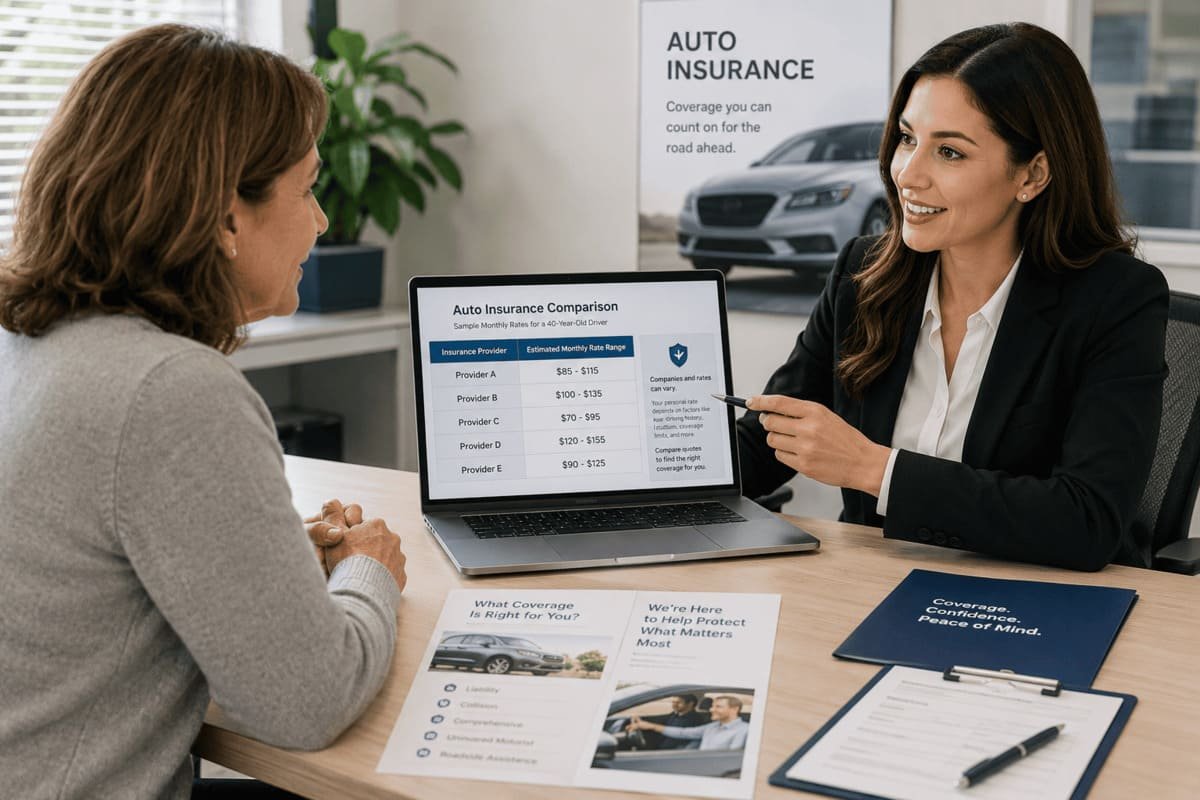
Car insurance for low income drivers is often discussed as if the only question were the monthly premium. In practice, a driver with a tight budget may care just as much about the first payment, the timing of later installments, the risk of a missed payment and the amount of protection purchased. A policy that is easier to start can still cost more over the full term, while a lower total premium can still be difficult if the upfront payment is too high.
That is why The General vs Progressive car insurance should be tested in layers. First build a matched coverage quote. Next compare payment structure. Then test carrier-specific budget tools or discounts. Finally, add a third quote so the decision is not limited to two brands.
The General Low Down Payment Car Insurance: Where the Brand Can Fit
The General low down payment car insurance is a relevant search for drivers whose immediate problem is the amount required to start coverage. The General currently markets low down payments, flexible payment programs and convenient monthly payment options. It also focuses on drivers who may have had violations, accidents, prior coverage lapses or less-than-perfect credit, although actual acceptance and price still depend on underwriting and state rules.
That positioning can matter when a budget problem overlaps with a difficult insurance history. A lower initial payment can make coverage easier to activate, but it should never be evaluated separately from the remaining installments and total policy cost.
For broader carrier pricing and underwriting context, see The General Insurance. Keep that general brand research separate from this budget-specific The General vs Progressive comparison.
The General vs Progressive Rates: Save the Base Quote Before Changing Payment Choices
The General vs Progressive rates should be compared with the same garaging ZIP, drivers, vehicle, annual mileage, prior-insurance history, effective date and coverage. Keep state-required coverages, liability limits, collision and comprehensive choices, deductibles and optional protections matched as closely as the quote systems allow.
Then save three numbers: the amount due today, the scheduled installment amount and the full policy-term premium. The General vs Progressive cost can look different depending on which of those numbers is emphasized. A lower first payment is not automatically a lower total cost, and a lower total premium is not automatically the easiest payment schedule for a cash-constrained household.
Progressive Name Your Price: A Budget Tool, Not Price Matching
Progressive Name Your Price can be useful when a driver begins with a target budget. Progressive explains that the tool first uses quote information to establish available pricing, then shows coverage options that fit the amount the shopper wants to pay. It is not a tool that matches another insurer's quote.
That distinction matters for Progressive vs The General. A lower Progressive result after using Name Your Price may reflect different limits, deductibles or optional coverages rather than a lower price for the original matched policy. Always compare the adjusted Progressive option back to the saved base quote.
For Progressive-specific shopping details, compare Progressive Insurance before changing the matched policy.
The General vs Progressive Payment Plans: Compare the Whole Schedule
The General vs Progressive payment plans are especially important when income is irregular or the first payment must stay below a specific amount. Car insurance payment plans can differ by state, insurer, policy term, payment method and applicant. The quote or billing schedule should show what is actually available to you.
| Budget checkpoint | The General | Progressive | What to record |
|---|---|---|---|
| Amount due today | Brand emphasizes low down payments and flexible payment options | Quote determines the initial amount required for the selected policy and payment setup | Exact activation payment |
| Monthly or installment option | Monthly and flexible payment options may be available depending on policy | Payment options can include installments; available setup depends on the quote | Number, amount and due date of installments |
| Pay-in-full economics | Compare the quoted full-term price with the installment schedule | Progressive currently lists a pay-in-full discount where available | Total premium under each payment choice |
| Automatic payments | Check available scheduled-payment options in the policy or app | Progressive currently lists an automatic-payment discount where available | Discount, payment date and bank/card requirements |
| Possible fees | Review charges shown in the billing schedule or policy documents | Review charges shown in the billing schedule or policy documents | Installment, processing or payment-method charges |
| Missed-payment consequence | Verify cancellation and reinstatement rules for the issued policy | Verify cancellation and reinstatement rules for the issued policy | Grace period, notice rules and lapse risk where applicable |
Car insurance with monthly payments can improve short-term cash flow, but the best payment schedule is the one the household can reliably maintain. Missing a payment can create more serious costs if coverage cancels or lapses.
Low Down Payment Car Insurance Is Not the Same as No Money Down
Low down payment car insurance usually means a smaller amount is required to activate the policy, not that coverage starts for free. Current insurer guidance also warns that no down payment car insurance can be a misleading phrase because a valid policy generally requires an initial payment.
The General's current consumer explanation of a auto insurance down payment also emphasizes comparing the first payment with monthly installments, fees and the complete policy cost. Use the same test for both carriers rather than choosing from an advertised upfront number alone.
Low Income Car Insurance Does Not Mean a Universal Carrier Discount
Low income car insurance is a shopping intent, not a reason to assume that The General or Progressive will automatically apply a special income-based discount. This comparison therefore focuses on actual quote economics: price, verified discounts, amount due today, payment timing, coverage and insurance-history factors.
The General vs Progressive coverage also needs to remain matched. If a budget tool reduces the premium by reducing protection, label that as a coverage change. Do not describe it as a carrier saving until the same limits and deductibles are compared again.
Progressive vs The General for low income drivers can produce a different answer by ZIP and driver profile, so there is no responsible nationwide winner without a personalized quote.
Low Income Auto Insurance Assistance Is a Separate Search Intent
Some drivers are not simply shopping two commercial carriers. They may be looking for state programs, public assistance, special eligibility rules or ways to maintain legally required coverage during a financial hardship. That is a different intent from this branded comparison.
If that is your situation, start with low income auto insurance and eligibility resources. Then return to The General vs Progressive auto insurance only if a normal commercial quote still belongs in the comparison set.
Minimum Coverage Car Insurance: Lower Premium Does Not Remove Liability Risk
Minimum coverage car insurance can reduce the premium because it buys only the coverage required by the state and any other selected protections. But state minimum liability limits can leave the policyholder responsible for injuries or property damage above those limits. A lender or leasing company may also require collision and comprehensive coverage on a financed or leased vehicle.
For affordable car insurance for low income drivers, test state minimum coverage as its own scenario rather than silently lowering the limits inside one carrier's quote. Compare that scenario with a stronger liability option so the monthly saving is visible alongside the additional financial exposure.
Use the exact amount due today, not a generic monthly-price claim.
Compare the complete premium after the selected payment schedule and verified discounts.
Keep liability limits and deductibles matched before calling one quote cheaper.
Choose a payment schedule realistic enough to reduce the risk of another lapse.
Cheap Car Insurance for Low Income Drivers: Add a Third Quote
Cheap car insurance for low income drivers is easier to identify when The General and Progressive are not the only two results. Use a third carrier with the same ZIP, drivers, vehicle, prior-insurance history, coverage and effective date. If one result is much lower, inspect the declarations or quote details before assuming it is equivalent.
For another comparison path on one of our related projects, try cheap auto insurance quotes with the same baseline inputs so the control quote tests price rather than a different policy design.
Policy Lapse and SR-22: A Cheap First Payment Can Become Expensive
Auto insurance for low income drivers should account for the risk of a payment schedule that is difficult to maintain. A lapse in coverage can affect future insurance pricing and can create legal or registration problems when insurance is required. If an SR-22 is on file, a cancellation or lapse can also trigger state reporting consequences.
The General specifically markets to drivers with prior coverage lapses and high-risk histories. Progressive also states that it can file SR-22 forms in most states for eligible customers. Those capabilities can matter, but the quote still needs to be compared on price, coverage, payment requirements and the driver's actual filing obligation.
The General vs Progressive for low income drivers should therefore include one question before purchase: can this payment schedule realistically be maintained for the entire policy term? Preventing a new lapse can be more valuable than saving a small amount on the first payment.
Cheap Liability Car Insurance: Use It as a Separate Coverage Scenario
Cheap liability car insurance can be appropriate to compare when the vehicle is owned outright and the driver is intentionally evaluating liability-only coverage. It should not be mixed with a full-coverage quote from the other carrier because that would make The General vs Progressive rates meaningless.
If liability-only is a valid option for the vehicle, review liability coverage before bringing the selected limits back to both carrier quotes and comparing them again on equal terms.
What to Save From Every Budget-Focused Quote
Before deciding between The General and Progressive, save the insurer or issuing company shown on the quote, amount due today, total premium for the full term, payment dates, number of installments, any listed payment fees, liability limits, collision and comprehensive choices, deductibles, optional coverages, applied discounts, prior-insurance assumptions and effective date.
Also save what changed between scenarios. If a lower quote came from removing collision, raising a deductible, switching to autopay or reducing liability limits, that difference should remain visible. This prevents a cash-flow adjustment from being mistaken for a carrier pricing advantage.
The General vs Progressive cost should be reviewed again near renewal or after a meaningful change in driving record, vehicle, address, prior-insurance status or SR-22 requirement. The best budget fit today is not guaranteed to remain the best after those inputs change.
The General vs Progressive for Low-Income Drivers FAQ
There is no universal winner. Compare matched quotes using the same ZIP, drivers, vehicle, coverage, deductibles and effective date, then compare the amount due today and the full policy-term premium.
Do not assume a universal income-based discount. Use the personalized quote to verify the discounts actually applied, and treat state or public low-income insurance programs as a separate eligibility question.
The General currently emphasizes low down payments and flexible payment options. The exact initial payment, installments, fees and total premium depend on the issued quote, state and applicant.
It lets a shopper enter a desired budget and then shows Progressive coverage options that fit available pricing. It is not price matching, so compare any adjusted coverage back to the original matched quote.
Usually a valid policy requires some payment before coverage begins. Offers described as no down payment should be checked carefully for the actual first payment, financing, fees and total policy cost.
Not automatically. State minimum coverage may reduce premium but can leave substantial out-of-pocket liability above the policy limits. Financed or leased vehicles may also require collision and comprehensive coverage.
Not necessarily. Monthly or installment payments can make cash flow easier, while paying in full may qualify for a discount with some insurers. Compare the complete policy-term cost under each available payment option.
A lapse can create legal or registration problems where continuous insurance is required and may affect future insurance pricing. If an SR-22 is required, a lapse can also trigger reporting to the state.
The General markets coverage to many higher-risk drivers, including drivers who may need SR-22 filings, and Progressive states that it can file SR-22 forms in most states. Eligibility, price and filing rules still vary.
Compare the amount due today, full policy-term premium, payment schedule, possible fees, liability limits, deductibles, optional coverage, applied discounts, lapse risk and any SR-22 requirements.
Bottom line: Progressive vs The General for low income drivers should be decided with a matched base quote and a cash-flow test. The General's low-down-payment positioning may matter when the first payment or a difficult insurance history is the main obstacle. Progressive's Name Your Price tool may help explore coverage within a budget. Neither feature replaces a full-term cost comparison. Choose the policy whose activation payment, ongoing schedule and coverage are all realistic enough to keep in force.