
California Auto Insurance Coverage Options
California auto insurance coverage options are easier to choose when every layer is tied to a specific loss scenario. Instead of buying a vague “full coverage” package, this page uses a California Coverage Stack + Loss-Scenario Decision System: protect other people first, decide how much uninsured-driver protection you want, decide whether to insure your own vehicle, preserve mobility after a covered loss, address a loan or lease balance, and only then compare matched quotes.
Use the ZIP where the vehicle is actually garaged. Keep the same drivers, vehicle, mileage, liability limits, optional coverages, collision and comprehensive deductibles, effective date and payment assumptions across every insurer.
QuotesAutoInsurance.org is independently operated and is not the California Department of Insurance or an insurance company. This page is general educational information, not legal advice. Coverage, eligibility, deductibles and price vary by policy and insurer.
Start at the legal floor, then test higher limits.
Confirm the exact limits on the declarations page.
Read any rejection or reduction agreement carefully.
Match the decision to your household risk and health coverage.
Choose deductibles you could actually pay.
Check lender or lease requirements before removing coverage.
Confirm endorsement limits and exclusions.
Then compare the same completed stack across insurers.
How to Build California Car Insurance Coverage Around Real Loss Scenarios
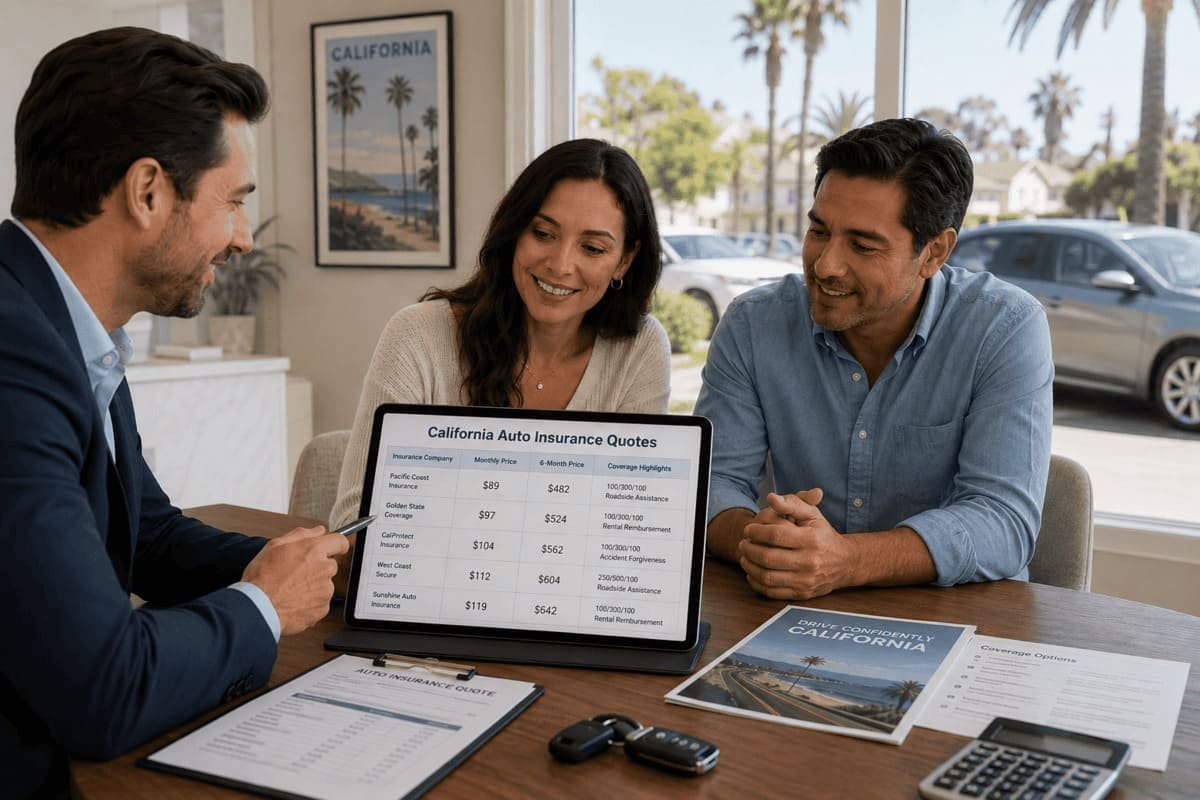
California drivers can see similar-looking auto insurance coverage options that hide different limits, deductibles, exclusions and endorsements. Build one written California insurance coverage checklist before requesting quotes so every carrier is answering the same protection question.
California auto insurance coverage should be separated from price-shopping intent. A California auto insurance coverage comparison or California car insurance coverage comparison asks what the policy protects and where the gaps are. Once that design is fixed, compare California auto insurance rates by ZIP with the same limits and deductibles. This separation keeps the coverage page focused on policy construction instead of competing with the rate page for the same intent.
California coverage options by ZIP still depend on the vehicle's real garaging location, but ZIP should not change the coverage logic. Choose the protection stack first; then compare the same drivers, vehicle, limits, deductibles, endorsements, effective date and payment assumptions across insurers.
Step 1: Set Liability Above a Legal Floor You Actually Understand
California liability coverage is the first layer. California bodily injury liability addresses covered injury or death liability to other people, while California property damage liability addresses covered damage to other people's property. For a standard policy, California 30/60/15 insurance is the current minimum framework.
| Coverage layer | Current standard minimum | Decision question |
|---|---|---|
| California bodily injury liability | $30,000 one person / $60,000 one accident | Would California higher liability limits better protect household assets and income? |
| California property damage liability | $15,000 per accident | How much property-damage exposure are you willing to retain? |
| California auto insurance 30/60/15 | 30/60/15 | Use the same floor in every quote before comparing price. |
California's 30/60/15 liability limits are a legal baseline, not a recommendation that every household stop there. Higher liability limits can protect more income and assets when a serious loss exceeds the minimum. For the current standard minimums and official coverage descriptions, review the California Department of Insurance auto insurance guide.
For legal compliance, review California car insurance requirements separately from the coverage-design decision.
The best auto insurance coverage in California is household-specific. A driver with significant assets, frequent passengers or substantial daily mileage may evaluate higher liability limits differently from a driver whose only goal is to meet the minimum. The useful question is not whether a limit is “popular,” but how much uninsured loss the household could absorb after the policy limit is exhausted.
Confirm the final California policy coverage limits on the California auto insurance declarations page. Do not rely on a verbal summary: the declarations and policy should identify the insurer, selected limits, covered vehicles and drivers, deductibles, endorsements and effective dates.
Step 2: Decide How Much Protection You Want from an Uninsured or Underinsured Driver
California uninsured motorist coverage and California underinsured motorist coverage belong in the people-protection layer. UM/UIM can respond when an at-fault driver has no liability insurance or not enough liability insurance, subject to the policy and California Insurance Code section 11580.2.
California uninsured motorist bodily injury can cover qualifying injury losses to insured people. California uninsured motorist property damage can address qualifying damage caused by an identified uninsured at-fault driver, with the current consumer guide describing a $3,500 limit. If the vehicle already carries collision coverage, a California collision deductible waiver can instead address the deductible in a qualifying uninsured-driver loss, subject to the policy and statutory conditions.
| Choice | What to verify | Why it matters |
|---|---|---|
| California uninsured motorist coverage | Limits and covered people | Defines the protection retained for uninsured-driver bodily injury. |
| California underinsured motorist coverage | How the policy treats the other driver's insufficient limits | Helps identify when UIM can respond. |
| California uninsured motorist rejection | Any signed deletion or reduction agreement | A written decision can materially change the coverage stack. |
Do not treat a California UM/UIM waiver like a routine click-through. Section 11580.2 generally places uninsured-motorist protection in the liability policy unless the named insured makes the written agreement allowed by law to delete or reduce it. Read any rejection or reduction form carefully and keep it with the policy records.
California auto insurance coverage for families should account for regular drivers, passengers and vehicle access. New drivers can change the household's exposure substantially, so verify who must be listed, which vehicle each person uses and whether any driver restrictions or exclusions apply.
Step 3: Define “Full Coverage” Before Choosing Collision and Comprehensive
California collision coverage generally addresses covered damage to your vehicle caused by physical contact with another vehicle or object. California comprehensive coverage generally addresses covered non-collision losses such as theft, fire, vandalism, windstorm, flood or falling objects. Together, collision and comprehensive form the core California physical damage coverage decision.
“Full coverage car insurance in California” is not a single policy defined by statute. In common shopping use, California full coverage auto insurance usually means liability plus collision and comprehensive, while UM/UIM, Medical Payments, rental reimbursement, GAP and other endorsements may or may not be included. Translate every “full coverage” quote into exact limits, deductibles, exclusions and endorsements before comparing price.
| Vehicle situation | Coverage question | What to compare |
|---|---|---|
| New or high-value vehicle | Would a large physical-damage loss materially hurt the household? | Collision, comprehensive, deductibles and GAP if relevant. |
| Older or lower-value vehicle | Does expected claim value justify the term premium? | Vehicle market value, deductible and complete policy-term premium. |
| Financed or leased vehicle | What does the contract require? | Check lender or lessor requirements before changing physical-damage coverage. |
Choose the California collision deductible and comprehensive deductible against an amount the household could realistically pay after a covered loss. Higher deductibles can reduce premium, but they shift more claim-time cost back to the policyholder.
For a California same deductible quote comparison, hold both physical-damage deductibles constant across carriers. That keeps a lower premium from winning simply because the quote shifted more out-of-pocket risk to you.
For the broader state shopping framework after the protection stack is defined, review car insurance in California for ZIP-based comparison and state-level shopping context. Keep the same limits, deductibles and endorsements so the broader quote process does not undo the coverage decisions made here.
Step 4: Add Medical Payments, Rental and Road Service Only for a Defined Need
California medical payments coverage, often called MedPay, can pay limited medical expenses for you and passengers after an auto accident regardless of fault, up to the policy limit. Evaluate California MedPay coverage alongside health insurance, household finances and the amount of immediate medical-expense risk you want the auto policy to assume.
California rental reimbursement coverage can help pay for temporary transportation while the insured vehicle is being repaired after a covered loss under applicable physical-damage coverage. Check the daily limit, maximum benefit and triggering coverage; rental reimbursement is different from reviewing liability and physical-damage protection when you rent another vehicle.
California roadside assistance coverage can include towing or related road service, but it is a convenience layer rather than a substitute for liability or physical-damage insurance. Compare service limits, covered events and benefits you may already have through a manufacturer, credit card or roadside membership.
| Coverage | Loss scenario | Verification |
|---|---|---|
| Medical Payments | Immediate covered medical expenses after an accident | Per-person limit and policy terms. |
| Rental reimbursement | Temporary transportation during a covered repair | Daily/maximum benefit and triggering coverage. |
| Road service | Towing or roadside event | Service limits and duplicate memberships. |
| California custom equipment coverage | Permanent equipment outside the base vehicle setup | Endorsement, valuation and stated limits. |
California auto insurance endorsements can also address specialized vehicle use. Business use, rideshare and transportation-network-company driving should be disclosed and matched to the actual use of the vehicle rather than assumed to be included in a standard personal policy.
Step 5: Treat Financing, Leasing and GAP as a Separate Contract Layer
Car insurance coverage for a financed or leased vehicle must be checked against the loan or lease contract as well as state law. California lender insurance requirements commonly include collision and comprehensive while the lender or lessor has a financial interest, even though those coverages do not satisfy the state's financial-responsibility requirement by themselves.
Before reducing physical-damage protection on a financed or leased car, verify the contract, deductible limits and any required endorsements. Removing required coverage can trigger contractual consequences or force-placed coverage.
California GAP insurance addresses a different problem: an eligible difference between the vehicle's covered market-value settlement and the remaining loan or lease balance after a total loss, according to the GAP contract or policy terms. GAP does not increase the vehicle's market value and does not replace collision or comprehensive coverage.
Keep the auto and home protection decisions separate first. After both coverage baselines are defined, households can compare home and auto insurance bundles by ZIP without letting a multi-policy discount hide weaker coverage on either policy.
Step 6: Audit Exclusions, Permissive Use and the Written Policy Before Price
California auto insurance exclusions can be as important as the headline limits. A California named driver exclusion can remove coverage for an identified person when validly applied under the policy and law. California permissive use coverage should also be checked in the actual policy instead of assuming every driver and every use receives identical protection.
A California insurance coverage review should compare the declarations page with the intended stack. Use one California auto insurance coverage checklist to confirm drivers, vehicles, policy limits, deductibles, endorsements, exclusions, discounts and effective dates before ranking price.
| Comparison test | Keep identical | Purpose |
|---|---|---|
| Risk inputs | Drivers, vehicle, garaging ZIP and mileage | Prevents quotes from pricing different risks. |
| Coverage stack | Liability, UM/UIM, MedPay and physical damage | Creates a California same coverage quote comparison. |
| Quote mechanics | Deductibles, endorsements, effective date and payment setup | Creates a repeatable matched-coverage baseline. |
California coverage and rate comparison should happen in that order: coverage first, rate second. Once the stack is fixed, compare top auto insurance companies in California on provider fit and issuing-company details without changing the protection.
California auto insurance coverage by company can differ in available endorsements, limits, deductibles and service structure. Compare the actual policy forms and options rather than assuming every insurer's similarly named product is identical.
If price becomes the next priority, review cheap car insurance in California without weakening the coverage stack.
If a loss has already occurred, claim reporting and handling are a separate workflow; this page remains focused on choosing coverage before the loss.
California Auto Insurance Coverage FAQ
These answers cover required liability, how much coverage to consider, full coverage, UM/UIM, collision, comprehensive, MedPay, GAP, deductibles and declarations.
For a standard private-passenger liability policy, California's current minimum is 30/60/15: $30,000 bodily injury per person, $60,000 bodily injury per accident and $15,000 property damage. Higher limits can be appropriate when the household wants more protection than the legal floor.
There is no single limit that fits every household. Start with the legal liability floor, then consider assets and income at risk, regular passengers, vehicle value, health coverage, financing or lease requirements, and how much deductible or uninsured loss you could pay yourself.
“Full coverage” is not one statutory policy. It commonly means liability plus collision and comprehensive coverage, while UM/UIM, Medical Payments, rental reimbursement, GAP and other endorsements can vary. Check the declarations page instead of relying on the label.
California law generally places uninsured-motorist coverage in a bodily injury liability policy, but a named insured can make the written agreement allowed by law to delete or reduce it. Underinsured motorist protection is part of the statutory UM/UIM framework. Read any rejection or reduction form before signing.
Collision generally covers physical damage to your car from contact with another vehicle or object. Comprehensive generally covers covered non-collision losses such as theft, fire, vandalism, windstorm, flood or falling objects, subject to policy terms and deductibles.
No. Collision and comprehensive do not satisfy California's financial-responsibility requirement. However, lenders and leasing companies commonly require physical-damage coverage while they have a financial interest in the vehicle.
Medical Payments coverage can pay limited medical expenses for you and passengers injured in an auto accident, regardless of fault, up to the policy limit. It is optional coverage and should be compared with the household's health-insurance and risk needs.
GAP can be useful when the amount owed on a loan or lease is greater than the vehicle's covered market-value settlement after a total loss. It addresses the eligible difference according to the GAP contract or coverage terms.
Choose deductibles you could realistically pay after a covered loss. Then compare carriers using the same collision and comprehensive deductibles so a lower premium is not simply the result of shifting more claim-time cost to you.
Check the legal insurer, named insured, drivers, vehicles, liability and UM/UIM limits, physical-damage coverage, deductibles, endorsements, exclusions, discounts and effective dates. The issued declarations and policy should match the coverage design you intended to buy.
Bottom line: build California auto insurance coverage around real loss scenarios, not around a vague “full coverage” label. Start with liability, decide how much uninsured-driver and medical protection fits the household, decide whether the vehicle needs physical-damage coverage, add only useful mobility or loan-balance endorsements, then audit exclusions and declarations. That process creates a California auto insurance coverage comparison that can be repeated across ZIPs and insurers without letting price silently change the protection.