
Progressive Car Insurance for Adaptive Vehicles
An adaptive vehicle should not be quoted as if the added equipment does not exist. For a driver who relies on hand controls, a wheelchair lift, a ramp, a transfer seat or another modification, the real insurance question is bigger than the base car: will the policy protect the vehicle, the adaptation and the driver's ability to stay mobile after a covered loss? This guide focuses on Progressive car insurance for drivers with disabilities and shows how to verify those three layers before comparing price.
Start with the ZIP where the vehicle is normally garaged. For an adaptive vehicle, the quote is only a baseline until the insurer knows about the modifications and confirms how they are valued. If you also compare home insurance, treat it as a separate household or bundle check rather than as coverage for the vehicle itself.
Build an auto quote with the correct garaging ZIP, drivers, vehicle and coverage limits, then verify every adaptive modification before buying.
Ask how the quote treats hand controls, lifts, ramps, lowered floors and other nonfactory equipment.
Use home insurance only as a separate household comparison or bundle test. It does not replace auto coverage for permanently installed vehicle adaptations.
Compare the combined household total only after the auto policy still protects the adaptive vehicle correctly.
Ramps, lifts and transfer equipment.
Lowered floors and steering devices.
Current replacement cost.
Photos and modification records.
CPE coverage and limits.
Deductibles and exclusions.
Rental reimbursement.
Accessible replacement planning.
How Progressive Covers Adaptive and Wheelchair-Accessible Vehicles
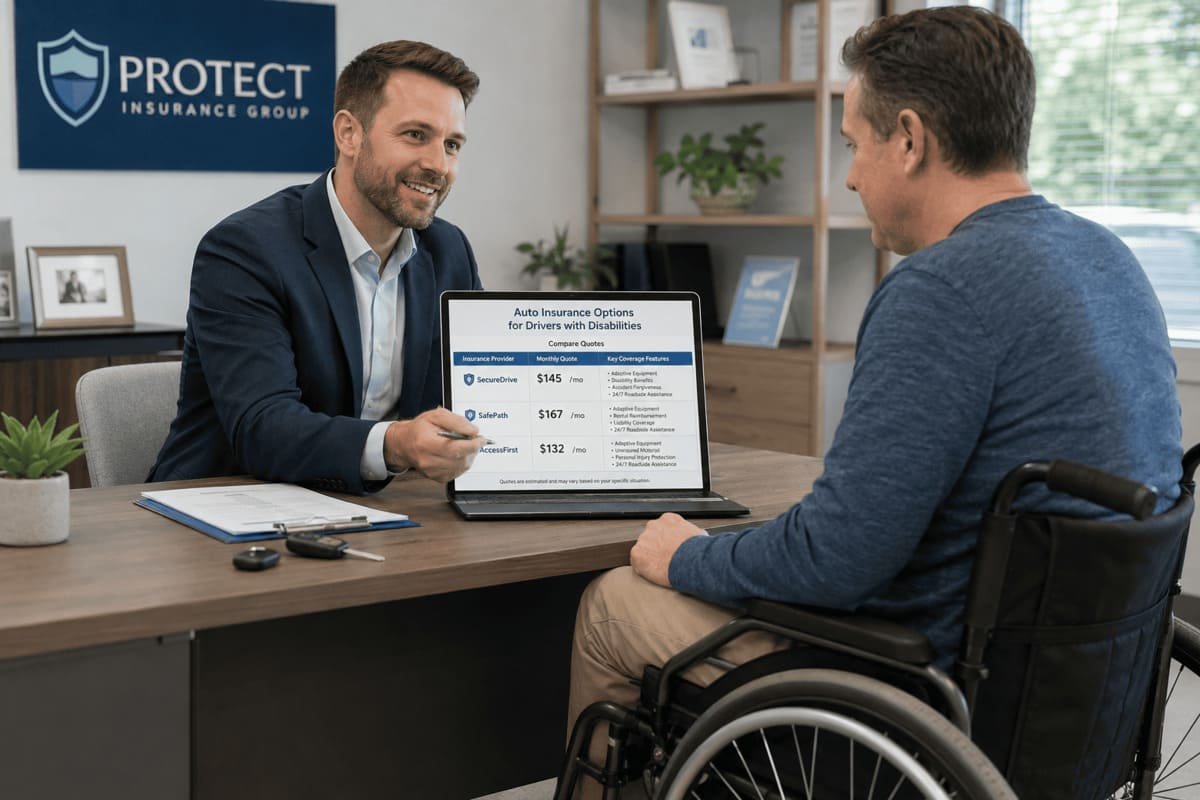
Progressive's current guidance says an accessible or wheelchair-adapted vehicle can generally be insured through a standard auto policy. The key difference is that vehicle modifications need to be disclosed and reviewed so the policy can account for the equipment. Progressive also explains that disability status by itself is not the reason to raise a rate or deny coverage, while the driver's actual risk factors and the cost to repair or replace an adaptive vehicle can still affect the premium.
The cleanest way to shop is therefore not to search for a separate “disability policy.” Start with the normal auto policy, then make the adaptations visible inside the coverage decision. Progressive's own disability car insurance guide specifically discusses wheelchair-adapted vehicles, hand controls, optional coverage and mobility-related questions.
Start With the Vehicle, Not the Disability Label
Drivers with disabilities use the same core insurance building blocks as other drivers: state-required liability and any other mandatory coverage, plus optional protection such as collision, comprehensive, roadside assistance, rental reimbursement, personal injury protection or medical payments where available. The presence of a disability does not automatically create a separate required coverage package.
What can change the insurance calculation is the vehicle. A wheelchair-accessible van or another adaptive vehicle can cost more to repair or replace because it includes specialized equipment and conversion work. That makes accurate vehicle information more important than a generic label. The quote should reflect the make, model, garaging ZIP code, driver information and the real cost of the modifications.
If you want a broader carrier benchmark before working through the adaptive-equipment details, compare Progressive auto insurance quotes with the same vehicle, limits and deductibles. Keep this page for the narrower question of how an adaptive vehicle should be configured and verified.
Tell Progressive About Every Adaptive Modification
Progressive advises customers to disclose vehicle modifications. For an adaptive vehicle, that can include hand controls, wheelchair ramps, wheelchair lifts, lowered floors, transfer seats, steering controls, pedal extenders, tie-down systems or other equipment added after the vehicle left the factory. A conversion can also involve structural changes that are not obvious from the VIN alone.
Create a simple equipment inventory before you request the final quote. Record the equipment name, manufacturer, installation date, installer, original cost and current estimated replacement cost. Keep invoices, photos and any conversion documentation. That information helps you compare the amount of protection against the real value at risk instead of guessing after a claim.
| Adaptive equipment | What to document | What to ask the insurer |
|---|---|---|
| Hand controls or steering controls | Model, installation invoice, photos and replacement cost. | Whether the equipment is treated as a covered modification and under which limit. |
| Wheelchair lift or wheelchair ramp | Lift/ramp model, installed cost, conversion company and maintenance records. | How physical damage to the lift or ramp is valued after a covered loss. |
| Lowered floor or structural conversion | Conversion invoice, photos and total added value. | Whether the conversion changes the insured vehicle value or coverage requirements. |
| Transfer seat or mobility controls | Equipment description, receipts and installation details. | Whether each permanently installed item falls within CPE coverage or another policy provision. |
Custom Parts and Equipment Coverage Is the Main Modification Check
Progressive calls its supplemental protection for aftermarket modifications custom parts and equipment coverage, commonly shortened to CPE coverage. Progressive says this coverage can help pay to repair or replace qualifying items added to modify the car. Its disability guidance specifically notes that CPE may help protect hand controls or other adaptations.
Do not assume that saying “full coverage” automatically solves the problem. Progressive's modified-car guidance says supplemental CPE coverage generally requires both comprehensive and collision coverage. The exact included amount, optional limit, deductible treatment and state availability should be confirmed on the quote or policy documents.
Progressive currently describes its CPE limit as typically up to $5,000. Its public guidance also says the first $1,000 of damage to certain aftermarket parts or modifications may be covered under comprehensive or collision before additional CPE applies. Because limits and policy language can vary, treat those figures as Progressive's current general guidance rather than a promise for every policy.
Collision and Comprehensive Protect the Base Vehicle
Think of the coverage in two layers. Collision and comprehensive protect the insured vehicle against covered physical damage subject to the policy and deductible. CPE coverage can extend protection for qualifying nonfactory equipment. The details matter because a base vehicle could be repaired while an expensive adaptation is only partly insured if the modification value was never addressed.
For a financed or high-value adaptive vehicle, compare the collision deductible and comprehensive deductible against the cash you could actually pay after a loss. A higher deductible can reduce the premium, but it also increases the amount you must fund before the vehicle can be repaired. The correct deductible is not automatically the cheapest one.
Roadside Assistance Matters When Mobility Depends on the Vehicle
Progressive specifically points to roadside assistance as potentially useful for drivers with limited mobility. The coverage question is not only whether towing exists. Confirm the towing distance, service limits, dispatch process and whether the provider can safely handle a wheelchair-accessible van, lowered-floor vehicle or other conversion without damaging the equipment.
If your conversion requires special loading or towing procedures, keep that information in the vehicle and in your phone. A roadside provider seeing the vehicle for the first time may not know the safest lift points or clearance limitations. Insurance coverage and practical recovery logistics need to work together.
Rental Reimbursement Should Be Tested Against Your Mobility Needs
Progressive rental reimbursement is optional coverage that can reimburse eligible rental-car charges after a covered accident damages or totals the insured vehicle, up to the policy's limits. Progressive currently describes typical daily limits and a limited number of covered days, but the exact amount depends on the policy and state.
For a driver who needs a wheelchair-accessible or otherwise modified replacement, the standard daily reimbursement amount may not answer the real problem. Ask before a loss whether an accessible rental or mobility vehicle can be arranged, whether the reimbursement limit is likely to cover it and what happens if an appropriate vehicle is not immediately available. Progressive's disability guidance itself recommends asking about mobility-vehicle options while the insured car is being repaired.
Wheelchairs, Scooters and Medical Devices Need a Separate Property Check
A wheelchair lift permanently attached to the vehicle and a wheelchair carried inside the vehicle are not necessarily the same insurance exposure. Progressive tells drivers to ask whether coverage extends to scooters or other medical devices that are not part of the car itself. Do not assume the auto policy automatically covers every mobility device simply because it was inside the vehicle during a loss.
List expensive portable equipment separately and ask which policy would respond after theft, collision damage or another covered event. Depending on the item and loss, property coverage outside the auto policy may also be relevant. The goal is to know the answer before the device is damaged or stolen.
Adaptive Equipment Can Affect the Quote Without Making Disability the Rating Factor
Progressive explains that disability status itself is not the pricing reason. The vehicle, however, can be more expensive to insure when special modifications increase repair or replacement costs. That distinction matters: a more expensive wheelchair conversion can create more insured value even though the driver's disability is not itself the premium factor.
Other ordinary rating inputs still matter, including location, driving history, vehicle characteristics, selected coverage and deductibles. When you benchmark car insurance rates by ZIP code, use the correct garaging location but remember that ZIP alone cannot capture the value of adaptive equipment.
Adaptive Electric Vehicles Need Two Separate Coverage Checks
An adaptive EV combines two cost centers: electric-vehicle repair requirements and mobility modifications. Battery systems, sensors, specialized repair facilities and towing procedures can affect the EV side, while hand controls, ramps, lifts or transfer equipment create the adaptation side. Do not let one review substitute for the other.
If the adaptive vehicle is electric, use the site's Progressive electric car insurance guide for the EV-specific repair and towing questions, then return to the CPE and mobility-equipment checklist here. The two pages should support each other without competing for the same owner intent.
Compare Progressive With One Fixed Adaptive-Vehicle Baseline
A quote comparison becomes unreliable if one insurer knows about a $7,000 wheelchair lift and another quote treats the car as factory-standard. Build one written baseline and use it every time: same drivers, vehicle, garaging ZIP code, liability limits, collision deductible, comprehensive deductible, adaptive-equipment list, CPE limit, roadside assistance and rental reimbursement.
Then compare the complete policy-term premium rather than only the monthly payment. If you want a second Progressive-focused workflow on another project, review Progressive insurance rates by ZIP code and keep the same coverage stack before you decide which quoted total is stronger.
| Quote item | Keep identical first | Adaptive-vehicle check |
|---|---|---|
| Driver and location | Drivers, garaging ZIP code, use and annual mileage. | Do not use a different driver profile just to obtain a lower comparison price. |
| Base vehicle coverage | Liability, collision, comprehensive, UM/UIM and medical coverage where selected. | Match the same deductibles and physical-damage structure. |
| Adaptive equipment | Same disclosed modifications and installed values. | Confirm the CPE limit is enough for the equipment being compared. |
| Mobility after a loss | Same roadside assistance and rental reimbursement choices. | Ask about accessible towing and replacement transportation logistics. |
| Total cost | Same policy term and payment structure. | Compare the full premium plus the claim-time deductible exposure. |
Claims Documentation Is Part of the Coverage Decision
Keep installation receipts, conversion invoices, photographs and equipment model numbers with your insurance records. If the equipment changes later, update the insurer instead of waiting until renewal. A new lift, replacement hand-control system or major conversion change can alter the value that needs to be protected.
After a loss, document both the vehicle damage and the adaptive-equipment damage. Ask the repair facility to separate factory-vehicle repair costs from conversion or mobility-equipment work when practical. That makes it easier to see which part of the claim is being evaluated under the base physical-damage coverage and which part relates to custom equipment.
Adaptive Vehicle Insurance Checklist Before You Buy
| Final check | What to confirm |
|---|---|
| Vehicle description | The insurer knows the vehicle is wheelchair-accessible or otherwise adapted. |
| Modification inventory | Hand controls, wheelchair lift, wheelchair ramp, lowered floor, transfer seat and other equipment are listed accurately. |
| Equipment value | Receipts and current replacement estimates support the amount you want protected. |
| Collision coverage | The deductible and physical-damage protection fit the base vehicle. |
| Comprehensive coverage | The deductible and covered non-collision risks are understood. |
| CPE coverage | The available custom parts and equipment coverage limit is enough for the modifications. |
| Roadside assistance | Towing limits and service procedures fit the converted vehicle. |
| Rental reimbursement | The daily/total limit and accessible transportation plan are realistic. |
| Portable mobility devices | Wheelchairs, scooters or medical devices carried in the car have a known coverage path. |
| Complete price | The full policy-term premium is compared with the same limits, deductibles and adaptive-equipment assumptions. |
Bottom line: The strongest adaptive-vehicle quote is not simply the lowest price. It is the quote that clearly protects the base vehicle, recognizes the adaptations you depend on and gives you a realistic plan for towing and temporary transportation after a covered loss.
FAQ: Progressive Car Insurance for Drivers With Disabilities
These questions focus on wheelchair-accessible vehicles, adaptive equipment, CPE coverage and mobility after a covered loss.
Progressive says accessible and wheelchair-adapted vehicles can generally be insured through a standard auto policy. The important extra step is disclosing vehicle modifications and confirming how the policy covers the added equipment.
Not simply because of disability status. Progressive explains that drivers with disabilities use the same basic auto insurance structure as other drivers, while optional coverages may matter more when a vehicle has expensive adaptations or mobility needs.
Yes. Tell the insurer about adaptive modifications such as hand controls, ramps, lifts, transfer equipment or other nonfactory features. Undisclosed modifications may not be fully reflected in the vehicle value or covered the way you expect after a loss.
Custom parts and equipment coverage, often called CPE coverage, is optional protection for qualifying aftermarket parts or modifications added to a vehicle. Progressive says CPE typically works with comprehensive and collision coverage and is subject to policy limits and terms.
Potentially. Progressive specifically notes that CPE coverage may help protect hand controls or other vehicle adaptations. Confirm each item, its installed value, the available CPE limit and the applicable deductible before relying on the coverage.
Progressive says comprehensive and collision are generally required before its supplemental custom parts and equipment coverage can be added. They also protect the base vehicle against covered physical damage, subject to deductibles and policy terms.
It can be especially important when mobility depends on the vehicle. Check towing distance, service limits and whether the towing provider can safely handle the vehicle's conversion, lowered floor, ramp or other equipment.
No guarantee should be assumed. Progressive rental reimbursement can pay eligible rental costs after a covered loss up to policy limits, but an accessible or mobility-equipped replacement may require advance coordination and may cost more than a standard rental.
Do not assume they are. Progressive advises drivers to ask whether coverage extends to scooters or other medical devices that are carried in the vehicle but are not part of the car itself. Separate property coverage may be relevant depending on the item and loss.
Keep drivers, garaging ZIP code, vehicle, liability limits, collision and comprehensive deductibles identical first. Then verify the declared modifications, CPE limit, roadside assistance, rental reimbursement and complete policy-term premium before comparing price.