
Understanding Coverage Options for Electric Cars That May Include Progressive
Electric vehicles (EVs) have unique insurance considerations, especially around battery systems, advanced sensors, and charging equipment. This guide explains what EV owners should compare in a policy and how to review quote options fairly using the same baseline settings (ZIP code, limits, deductibles, and key coverages). Availability and coverage details vary by state and policy.
If you want your comparison to include Progressive, start with the baseline workflow on this Progressive quote comparison guide, then verify EV-related coverages line by line before choosing any policy.
What to Compare for Electric Vehicle Insurance
When reviewing EV insurance options, focus on the areas that most often drive claim costs: collision and comprehensive deductibles, OEM/parts coverage (where available), roadside towing requirements, and how the policy treats charging equipment. Some policies may offer endorsements or options related to equipment, while others treat them under homeowners or separate property coverage depending on the situation.
Get Your Free Auto Insurance Quotes
Compare EV quote options by ZIP code with the same limits and deductibles for fair results.
Get Your Free Home Insurance Quotes
If you have a home charger, review homeowners coverage and check whether bundling affects total cost.
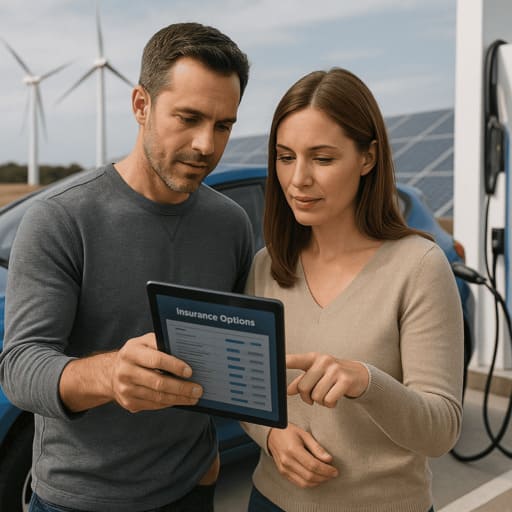
Key Coverage Highlights for EV Owners
EV claims often involve high-cost components and calibration. When comparing quotes, focus on collision and comprehensive coverage terms, deductibles, and whether the policy references OEM parts or specialized repair requirements (where available). Review towing requirements too—some EVs need flatbed towing.
Charging equipment coverage can be handled differently depending on where the equipment is located and what caused the loss. In some cases, homeowners insurance may apply to installed equipment, while auto coverage typically applies to the vehicle itself. Always check how your quote documents describe charging equipment and related property.
If you drive frequently, check rental coverage options and towing/roadside details. Also verify what is excluded (wear and tear, gradual battery degradation, software-only issues, and aftermarket modifications) since those items are commonly limited across insurers.
To keep premiums reasonable, compare deductibles first, confirm your annual mileage estimate, and keep limits consistent across quotes. Bundling auto and home (where available) may change the total cost, so compare the bundle total against standalone quotes.
| Item | What to Check on Your Quote | Why It Matters |
|---|---|---|
| Charging Equipment | Whether coverage is addressed under home or separate property endorsements | Installed chargers are often treated differently than vehicle damage |
| Battery / High-Voltage Components | Repair terms, exclusions, and any OEM/parts language (if shown) | EV repairs can be expensive and may require specialized facilities |
| Roadside / Towing | Towing type (flatbed) and service limits | Incorrect towing can cause damage and add cost |
| Usage-Based Options | Availability, enrollment rules, and what data is used (if offered) | Pricing impact varies by eligibility, driving patterns, and state |
Discounts and Cost-Saving Tips for EV Drivers
Discounts vary by provider, state, and profile. Common ways drivers reduce premiums include maintaining a clean record, choosing a deductible they can afford, comparing bundle totals, and verifying mileage and garaging ZIP accuracy. If you want general saving strategies, see our auto insurance savings tips page.
High-mileage EV owners should pay extra attention to annual mileage estimates and commute assumptions. For a structured comparison method, see this high-mileage guide.
Frequently Asked Questions
What coverage should EV owners compare first?
Start with collision and comprehensive deductibles, liability limits, roadside/towing details, and how charging equipment is treated under your policies.
Are there discounts specifically for EV owners?
Discount availability varies. Some insurers may offer program-based discounts, bundling credits, or safe-driving savings depending on state and eligibility.
How can I lower my premiums?
Keep a clean record, verify mileage and garaging ZIP accuracy, compare deductibles, and check bundle totals versus standalone quotes.
Does EV roadside assistance cover towing?
Roadside assistance terms vary by provider and plan. Confirm towing limits and whether flatbed towing is included if your EV requires it.
In summary: EV insurance works best when you compare quotes with one consistent baseline and verify coverage details that matter most for electric vehicles. For broader quote comparisons, you can also compare quotes across multiple providers.