
How to Get Progressive Rideshare Insurance
Progressive rideshare insurance is generally added to a Progressive personal auto policy for drivers who use Uber, Lyft, or another rideshare platform. The endorsement is designed to address gaps that can appear after the app is turned on and before a ride is accepted. Coverage availability, platform coordination, limits, deductibles, and delivery-app treatment vary by state and policy.
Enter the ZIP code where the vehicle is normally parked overnight. Disclose every rideshare or delivery app, annual mileage, hours, vehicle use, drivers, limits, deductibles, physical-damage coverage, and requested effective date.
QuotesAutoInsurance.org is independently operated and is not owned, sponsored, or endorsed by Progressive, Uber, Lyft, DoorDash, or another platform. The form may connect users with licensed insurance partners and does not guarantee a Progressive quote, rideshare endorsement, price, or policy issuance.
Progressive Rideshare Insurance: The Direct Answer
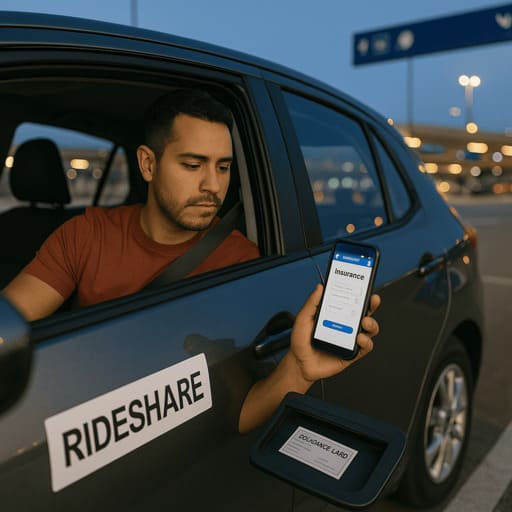
Progressive states that drivers using a rideshare platform must add rideshare coverage to their Progressive personal auto policy. The endorsement can extend eligible personal-policy protection while the driver is logged into the app and waiting for a request, a period when the platform’s insurance can be limited.
Existing Progressive customers generally need to contact Progressive to add the endorsement. New customers can begin a rideshare insurance quote through the auto quote process and disclose rideshare driving during the application. For searches such as Progressive insurance for Uber drivers or Progressive insurance for Lyft drivers, the essential step is confirming that the endorsement is active before the app is used. In states where a personal-policy rideshare endorsement is unavailable or unsuitable, Progressive may direct the driver toward commercial auto or livery coverage.
Progressive’s current rideshare page explains the company’s coverage framework and should be reviewed before purchasing: official Progressive rideshare insurance guide.
Adding the endorsement does not make every coverage automatic. Collision, comprehensive, UM/UIM, medical payments or PIP, roadside assistance, rental reimbursement, and other protections generally must already be selected on the personal policy and remain subject to state rules and policy terms.
How Progressive Rideshare Coverage Works by Driving Period
Insurance can shift according to the driver’s app status. Platform rules and state laws differ, so the following table is a review framework rather than a substitute for the actual Progressive endorsement and platform certificate.
| Driving period | Primary coverage question | What to verify |
|---|---|---|
| App off | Is the vehicle being used for a permitted personal purpose? | The Progressive personal auto policy and selected coverages generally apply, subject to normal terms and exclusions. |
| Online and waiting | What fills the gap before a ride or delivery request is accepted? | Progressive rideshare liability, collision, comprehensive, UM/UIM, PIP or MedPay, roadside, and rental treatment when those coverages are carried. |
| Request accepted | When does the platform policy become primary? | Platform liability limits, contingent physical damage, personal-policy requirements, deductibles, and any Progressive extended coverages. |
| Passenger or order in vehicle | Which TNC or delivery-company policy governs the active trip? | Legal insurer, policy dates, liability, UM/UIM, physical damage, exclusions, deductible, and claim-reporting rules. |
| Trip or delivery completed | When does active-trip coverage end? | Whether the driver returns to the online-and-waiting period or turns the app off and resumes personal use. |
What the Progressive Rideshare Endorsement May Extend
| Coverage | Waiting-period role | Important condition |
|---|---|---|
| Liability | Can provide primary liability while the driver is online and waiting, with possible additional TNC liability. | Limits and priority depend on state law, policy wording, and the platform certificate. |
| Collision and comprehensive | Can extend physical-damage protection to the waiting period. | The driver generally must carry the corresponding coverage on the Progressive personal auto policy. |
| UM/UIM | May extend selected uninsured or underinsured motorist protection while waiting. | Progressive notes that waiting-period protection may apply to the driver rather than guest passengers. |
| PIP or medical payments | May extend selected first-party medical protection to the waiting period. | Availability, covered persons, limits, and coordination vary by state. |
| Roadside and trip interruption | Selected roadside-related benefits may remain available during rideshare activity. | The coverage must be on the personal policy, and trip-interruption availability has additional conditions. |
| Rental reimbursement | Selected rental benefits may apply after a covered loss during rideshare activity. | Confirm limits, covered loss requirements, and whether a rental agreement permits rideshare use. |
Progressive Deductible Reimbursement
Progressive currently promotes deductible reimbursement as a rideshare feature. When the rideshare company’s physical-damage deductible is higher than the deductible on the Progressive personal policy, Progressive says it can reimburse the difference, subject to policy terms and eligibility.
For example, a platform deductible of $1,000 and a Progressive deductible of $500 could produce a $500 difference. This should not be treated as a universal claim payment rule; verify the applicable loss, platform policy, selected physical-damage coverage, state, and endorsement wording.
Record both deductibles before driving. Some platform deductibles are materially larger than ordinary personal-policy deductibles, which can affect the amount a driver must initially pay after a covered collision.
Does Progressive Rideshare Insurance Cover Delivery Apps?
Progressive states that its rideshare coverage applies to delivery service platforms such as Uber Eats and DoorDash in most states. Progressive delivery driver insurance is therefore usually discussed through the rideshare endorsement rather than as one universal separate product. The exact split between the Progressive policy and any insurance maintained by the delivery company can still vary by state, platform, app status, and policy wording.
Food, grocery, package, and courier work should be disclosed separately. A policy that accepts passenger rideshare should not automatically be assumed to accept every delivery platform, cargo type, route, or commercial use.
Confirm coverage while waiting, driving to the merchant, carrying the order, completing drop-off, and returning online.
Discuss delivery radius, cargo, route frequency, vehicle class, annual business mileage, and whether commercial underwriting is required.
List every platform and confirm which policy applies when two apps are active or one request overlaps another.
Save the current certificate and verify liability, physical damage, deductible, exclusions, and active-period definitions.
When a Commercial Auto Policy May Be Needed
Progressive describes its rideshare endorsement as an add-on to a personal auto policy in most states. A commercial auto or livery policy may be necessary when the personal endorsement is unavailable, the vehicle or activity does not qualify, or the driver operates a taxi, limousine, transportation business, fleet, or other for-hire service outside an eligible personal-use framework.
| Risk factor | Why it matters | Question to ask |
|---|---|---|
| Vehicle ownership | A business-owned, fleet, leased, or specially titled vehicle can require different underwriting. | Can this exact ownership structure be written on a personal policy? |
| Type of service | Taxi, limousine, scheduled transport, courier, and contract delivery can fall outside a personal rideshare endorsement. | Is the activity eligible for the Progressive rideshare endorsement? |
| High business use | Heavy annual mileage, full-time operation, broad delivery territory, or multiple drivers can change eligibility. | At what point does Progressive require commercial auto? |
| Cargo or passenger exposure | Special cargo, paid passengers, airport work, or contractual requirements can require higher limits or special forms. | Are cargo, livery, or additional-insured requirements present? |
Information Needed for a Progressive Rideshare Quote
What Affects Progressive Rideshare Insurance Cost?
Adding rideshare coverage increases the price of a personal auto policy, but Progressive does not publish one universal surcharge. The result depends on the driver, state, vehicle, use, existing coverage, limits, deductibles, and underwriting.
Traffic, theft, weather, repair costs, claim frequency, congestion, and local insurance rules can affect pricing.
Accidents, violations, claims, license status, experience, and continuous insurance can affect eligibility and premium.
Vehicle value, repair cost, annual mileage, rideshare hours, delivery use, financing, and garaging can matter.
Liability limits, collision, comprehensive, UM/UIM, medical protection, deductibles, rental, and roadside affect cost.
Passenger rideshare, delivery, multi-app operation, full-time use, and commercial activity can change the policy needed.
Policy history, bundling, payment method, electronic documents, Snapshot eligibility, and other discounts can affect the final premium.
Review how Progressive calculates an auto quote and keep the same rideshare use, coverage, and deductibles when comparing companies.
How to Handle an Accident While Ridesharing
How to Compare Progressive Rideshare Coverage Fairly
Build one realistic coverage baseline and use it with every insurer. Match drivers, vehicles, garaging address, annual personal and gig mileage, apps, liability limits, physical-damage coverage, deductibles, UM/UIM, medical protection, roadside, rental, payment plan, and effective date.
Then compare the complete policy-term premium and rideshare endorsement—not only the monthly payment. A lower price can result from weaker liability limits, missing collision or comprehensive, a higher deductible, no rental coverage, or different platform-period protection.
Review the broader Progressive insurance quotes guide and use a matched auto insurance quote comparison by ZIP before replacing existing coverage.
FAQ About Progressive Rideshare Insurance
Yes. Progressive offers a rideshare endorsement that can be added to an eligible personal auto policy in most states. Availability and terms vary.
Existing customers generally contact Progressive to add the endorsement. New customers can start an auto quote and disclose rideshare or delivery driving during the application.
Progressive states that drivers using a rideshare company must add rideshare coverage to their personal auto policy.
It is designed to extend eligible personal-policy protection while the driver is online and waiting for a request. The exact coverage depends on selected coverages, state, policy, and platform.
Progressive says rideshare coverage applies to delivery service platforms in most states. Confirm the exact app, state, period, and platform insurance before driving.
Collision and comprehensive can extend to the waiting period when those coverages are carried on the personal policy and the loss is otherwise covered.
Progressive may reimburse the difference when the rideshare company’s physical-damage deductible is higher than the deductible on the Progressive personal policy, subject to policy terms.
Commercial or livery coverage may be needed when the endorsement is unavailable, the activity or vehicle is ineligible, or the driver operates a taxi, limousine, fleet, or other business transportation service.
Yes. Disclose the activity before driving and obtain written confirmation of the effective endorsement, covered apps, selected coverages, and applicable periods.
Bottom line: to obtain Progressive rideshare coverage, disclose the work, add the endorsement before driving, verify each app period, carry the physical-damage and optional coverages you need, confirm delivery-app eligibility, and save the written policy and platform insurance details.